
Cruise Packing List Builder: Core Items and Trip-Specific Modules
A useful master packing list is modular, not enormous. Start with a small core every traveler verifies, then attach only the climate, activity, health, family, work, and event modules that match the booked journey.
Protect the embarkation core
Princess recommends carrying essential medicine, travel documents, valuables, and breakables in its current pre-cruise guidance. Use that as a risk principle while checking the actual line, airline, terminal, and bag rules for the booked trip.





Build the health module from the traveler
The Centers for Disease Control and Prevention Pack Smart guidance covers prescriptions, copies, first-aid supplies, sun and insect protection, and destination-specific planning. A clinician, pharmacist, destination authority, carrier, and cruise medical or accessibility team may each govern a different detail.


Plan purchases and food for the return
United States Customs and Border Protection explains declaration responsibilities and restricted goods in its Know Before You Go guidance. Travelers returning elsewhere must use the relevant customs and agriculture authorities, and duty-free does not automatically mean declaration-free.


Use four decisions for every line
Mark each candidate pack, verify, obtain later, or skip. Pack means it has a job and belongs in an assigned bag; verify means a provider or authority still controls it; obtain later means replacement is realistic; skip means it adds no useful capability.
This keeps a master list from becoming a command to buy everything. Add the traveler's quantity beside accepted items and record the source and check date beside policy-sensitive ones.


Core module: identity and trip records
Verify the documents required for each traveler's nationality, residence, age, name, route, ports, transit, and return. Include booking details, boarding information, insurance contacts if held, transfer details, emergency contacts, and any consent or accessibility records actually required.
Keep originals secure and accessible, with protected backups only where useful and lawful. A photocopy, phone image, expired card, or app record does not replace an original unless the responsible authority says it does.


Core module: money and communication
Choose accepted payment methods, a backup under separate control, cards that will work abroad, and a modest cash plan based on destinations. Add a phone, correct cable, approved charger, authentication access, and offline copies of critical contact details.
Do not rely entirely on ship Wi-Fi, roaming, a single wallet, or a battery-powered app. Protect account and cabin information, notify relevant issuers only when they request it, and choose a cash amount the traveler can manage securely.


Health and accessibility module
List prescription medicine, rescue treatments, glasses, hearing supplies, diabetes or ostomy supplies, mobility-device accessories, compression garments, sensory supports, and other essentials by traveler. Check legality, labeling, documentation, quantity, storage, refrigeration, sharps, batteries, assistance, and disposal.
Keep high-consequence items accessible within carrier rules and add tested spares when replacement would be difficult. Do not use a generic travel kit to diagnose or medicate someone, and seek professional guidance for personal health decisions.


Bag-role module
Assign each permitted bag a job: personal essentials, first-day cruise needs, checked-flight contents, portered luggage, excursion carry, and return purchases. Mark what remains under the traveler's control and what must be removed if a carrier gate-checks a bag.
Measure and weigh bags by the current operating carrier's method, then test lifting and rolling. A bag advertised as carry-on size may still fail a particular airline, fare, aircraft, transfer, terminal, or mobility requirement.


Everyday clothing module
Build outfits from planned activities and repeatable layers rather than one look per day. Include underwear, socks, sleepwear, comfortable tops and bottoms, weather layers, swimwear, dining combinations, and familiar shoes according to the itinerary and laundry plan.
Adjust for faith, culture, gender expression, body comfort, sensory needs, medical equipment, and access. Counts should follow actual changes and cleaning opportunities, not an unsupported universal formula.


Toiletry and personal-care module
Choose only products used at home or specifically required: dental care, cleansing, hair care, shaving or grooming, menstrual or continence supplies, skin care, deodorant, contact-lens care, and other personal needs. Preserve labels where ingredients, dosage, warnings, or identification matter.
Estimate quantity from uses and secure compatible containers against leaks. Airline liquids, cruise security, medicine exceptions, destination restrictions, and checked-bag rules are different questions, so never label one pouch universally compliant.


Electronics module
List each device's purpose, battery type, watt-hour marking where relevant, voltage input, cable, charger, adapter, storage, and offline content. Remove duplicate gadgets and check the cruise line, operating airline, and destination rules for powered equipment.
A plug adapter does not convert voltage, a power bank is not ordinary checked-bag cargo, and cruise-approved marketing is not permission. Leave behind damaged or recalled batteries and unresolved heating, extension, outlet-splitting, radio, drone, or appliance products.



Cabin-living module
Add only items that solve a known cabin task: a laundry sack, toiletry pouch, sleep mask, earplugs, permitted night light, simple organizer, or accessibility aid. First check what the booked cabin supplies and whether an object could damage surfaces, obstruct doors, cover fixtures, or narrow a route.
Avoid building a second household for a temporary room. Magnets, over-door organizers, hooks, adhesives, fans, kettles, and multi-function power products require exact policy and object checks.


Warm-weather module
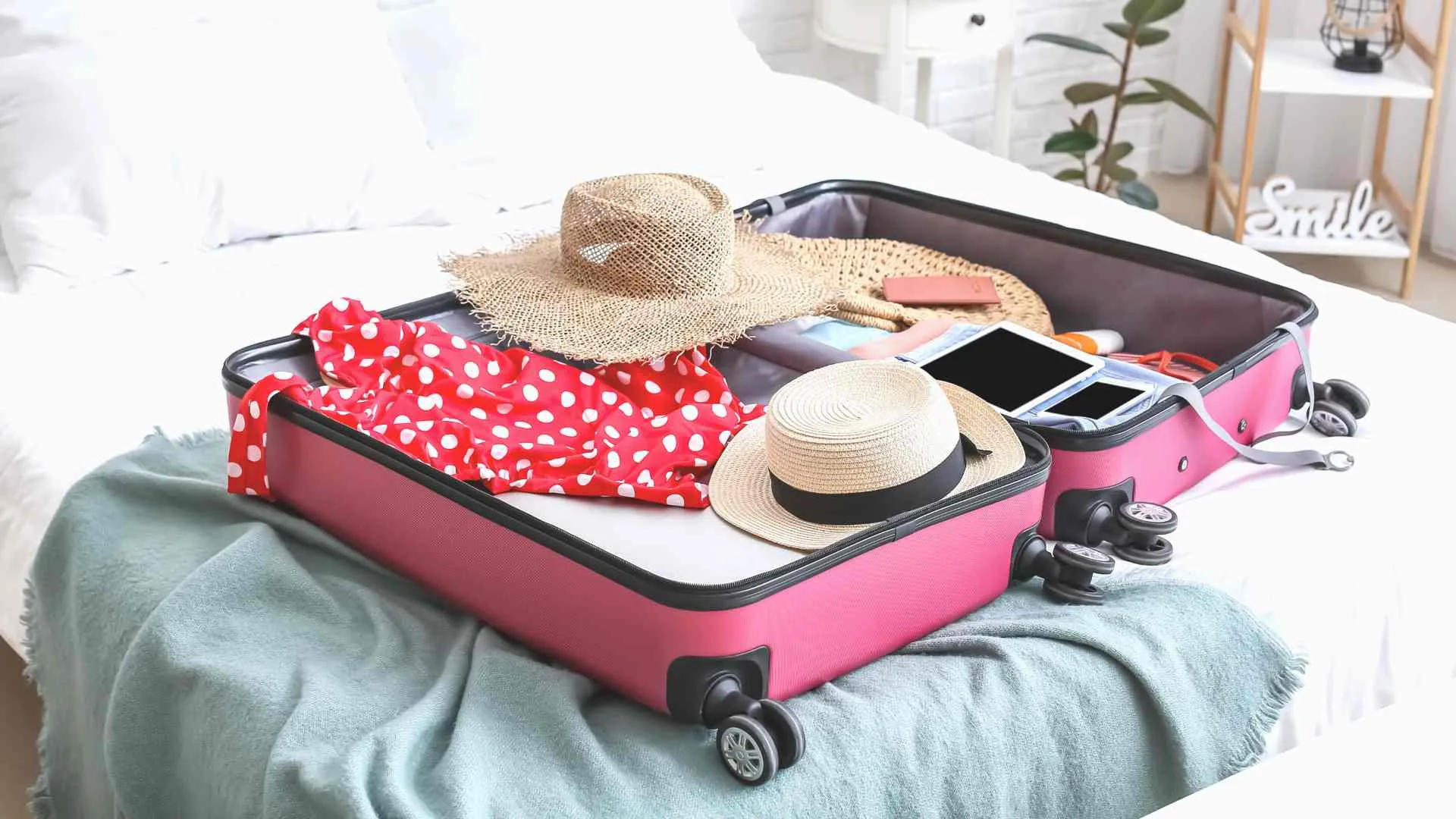
For heat and sun, consider breathable coverage, a hat, sunglasses, sunscreen used as labeled, refillable water capacity where permitted, swimwear, and a dry layer for indoor spaces. Match quantities and materials to the actual exposure, activities, skin, and washing plan.
No sunscreen is waterproof, a bottle does not guarantee potable refill access, and hot-weather clothing does not eliminate heat illness. Follow destination, activity-provider, and health guidance rather than relying on a packing product.


Cool, wet, or windy module
Use a layered system with a comfortable base, insulating middle, weather-appropriate outer layer, warm accessories, and familiar footwear when conditions justify it. Check the forecast near departure without treating it as a guarantee.
Water-resistant and waterproof labels have limits that depend on construction, wear, and use. Add dry storage for essential items and an indoor alternative for optional activities rather than promising equipment will make conditions safe.


Port and excursion module
For each booked activity, note meeting information, operator contacts, physical requirements, terrain, clothing, footwear, water, food, identification, money, sun or rain needs, and supplied equipment. Confirm bag restrictions and prohibited objects directly with the provider.
A beach visit, tender transfer, religious site, hike, wildlife tour, bicycle ride, and city walk should not share an automatic list. Pack to the exact commitment and remove speculative gear.


Child, caregiver, and family module
Build individual cores for each traveler rather than placing all responsibility in one bag. Consider documents and consent, prescribed medicine, feeding, diapers or continence supplies, familiar comfort items, hearing or sensory supports, clothing changes, safe sleep arrangements, and age-appropriate activity requirements.
Verify cruise, airline, destination, and product rules for ages, equipment, supervision, seating, pools, clubs, and shore activities. Never assume the ship supplies a particular brand, size, formula, car seat, bed rail, or childcare arrangement.


Work and study module
If work is necessary, list the specific laptop or tablet, charger, authentication method, files, privacy tools, employer permissions, connectivity needs, and a non-network fallback. Check battery and voltage requirements before travel.
A cruise connection may not meet speed, latency, access, or confidentiality needs, and no package guarantees a call will work. Leave optional work equipment home if it duplicates a phone or creates an unmanaged security burden.


Celebration and event module
Add clothing, small gifts, decorations, invitations, or ceremonial items only after checking the venue and line. Keep decorations flame-free, non-damaging, and away from doors, sprinklers, detectors, signs, and accessible routes.
Do not pack realistic weapons, open flames, heating items, loose glitter, prohibited adhesives, or food and alcohol without verification. A digital note or ship-arranged amenity may replace bulky single-use supplies.


Laundry and clothing-care module
Decide whether to carry enough, repeat wear, hand wash permitted garments, use self-service machines, or purchase line service. Verify ship facilities, turnaround, cost, detergent sensitivity, garment care, and drying restrictions.
Do not assume an iron, steamer, extension line, balcony drying setup, or detergent is allowed. Include a simple dirty-clothing separator and a contingency for wet items without sealing them for long periods.



Assign one responsible carrier to each shareable item, such as approved charging equipment, basic first aid, paper itinerary, or permitted game. Keep personal medicine, identity documents, critical accessibility supplies, and necessary communication independent where a separation would cause harm.
Write the assignment instead of relying on memory. Sharing saves duplication only when people can access the item when needed and its loss does not disable the whole group.


Buy, borrow, rent, or skip module
Compare the consequences of going without, replacement availability, fit, hygiene, compatibility, policy, luggage burden, and future use. Rent specialist excursion equipment from an appropriate provider when it is better matched to the activity than an unfamiliar transported product.
Do not assume ports carry a preferred medicine, size, formula, battery, or adaptive item. High-consequence supplies belong in the verified core, while low-consequence comforts are stronger candidates to skip.


Return and customs module
Reserve room for purchases, receipts, protective packing, and declarations. Before buying food, alcohol, plants, seeds, wildlife products, medicines, batteries, liquids, or large goods, check customs, agriculture, carrier, and destination rules for the complete return route.
Permission to buy or bring something aboard does not prove it can enter the final country or fly home. Declare when required and avoid concealing or relabeling goods to bypass a rule.


Final subtraction and physical check
Lay everything out by module, remove duplicate functions, and put each accepted item into its assigned bag. Confirm documents, medicine, accessibility supplies, batteries, chargers, liquids, clothes, weather layers, and excursion needs physically rather than checking them off while they remain on a counter.
The finished list may be short or long because travelers and itineraries differ. Its quality comes from traceable decisions, current checks, and manageable bags, not from reaching a promotional item count.


Related packing guides
Compare the finished plan with the cruise planner guide, the Disney cruise packing guide, the Alaska cruise outfit guide, and the college cruise planning guide. Use each page for its stated job rather than combining every suggestion into one bag.

Ellie is the founder of Ellie's Travel Tips, where she shares practical cruise tips, port guides, and step-by-step itineraries to help you plan smarter trips for less. Her checklists and packing guides turn travel daydreams into doable plans.