Cádiz Cruise Port: Walkable Old Town or Seville Day Trip?
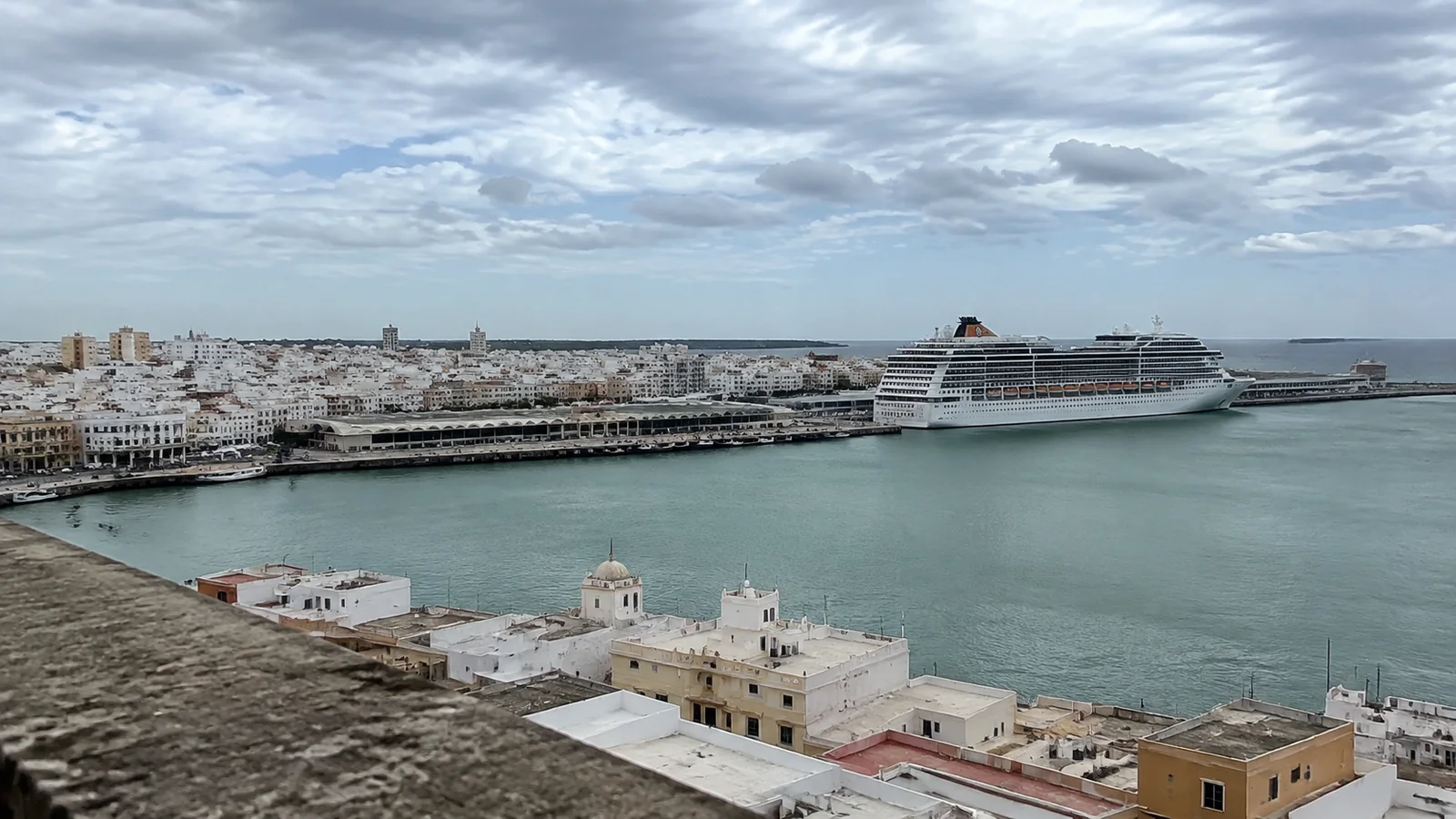
Cádiz is one of Spain’s easiest cruise ports for an independent day because ships normally berth about a five-minute walk from the historic center. Seville is possible on a long call, but its round-trip transfer consumes roughly three to four hours before traffic, station time, or a missed connection enters the picture.
Cádiz cruise port quick facts
- Arrival style: normally a docked port, not a tender.
- City-center access: about a five-minute walk from the Alfonso XIII terminal area.
- Best easy day: Cádiz Cathedral, El Pópulo, the market, Tavira Tower, and La Caleta.
- Seville distance: roughly 75 miles by road, depending on route.
- DIY difficulty: very easy in Cádiz, moderate to high for Seville.
- Currency: euro.
My default choice is Cádiz unless Seville is a major trip goal and the ship offers a genuinely long port day. Cádiz rewards slow walking, while Seville punishes a plan that assumes every connection runs perfectly.
Where cruise ships dock in Cádiz
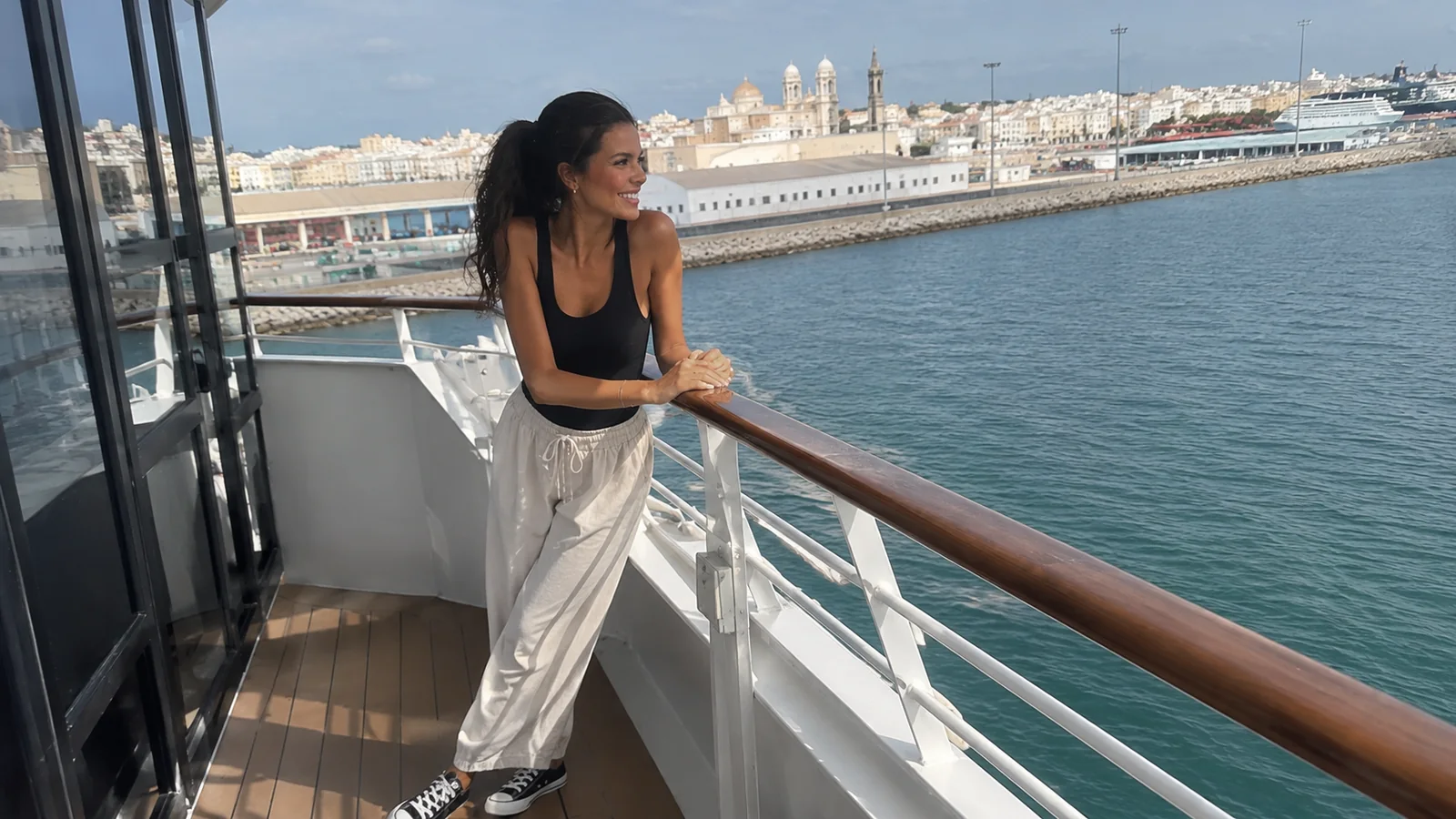
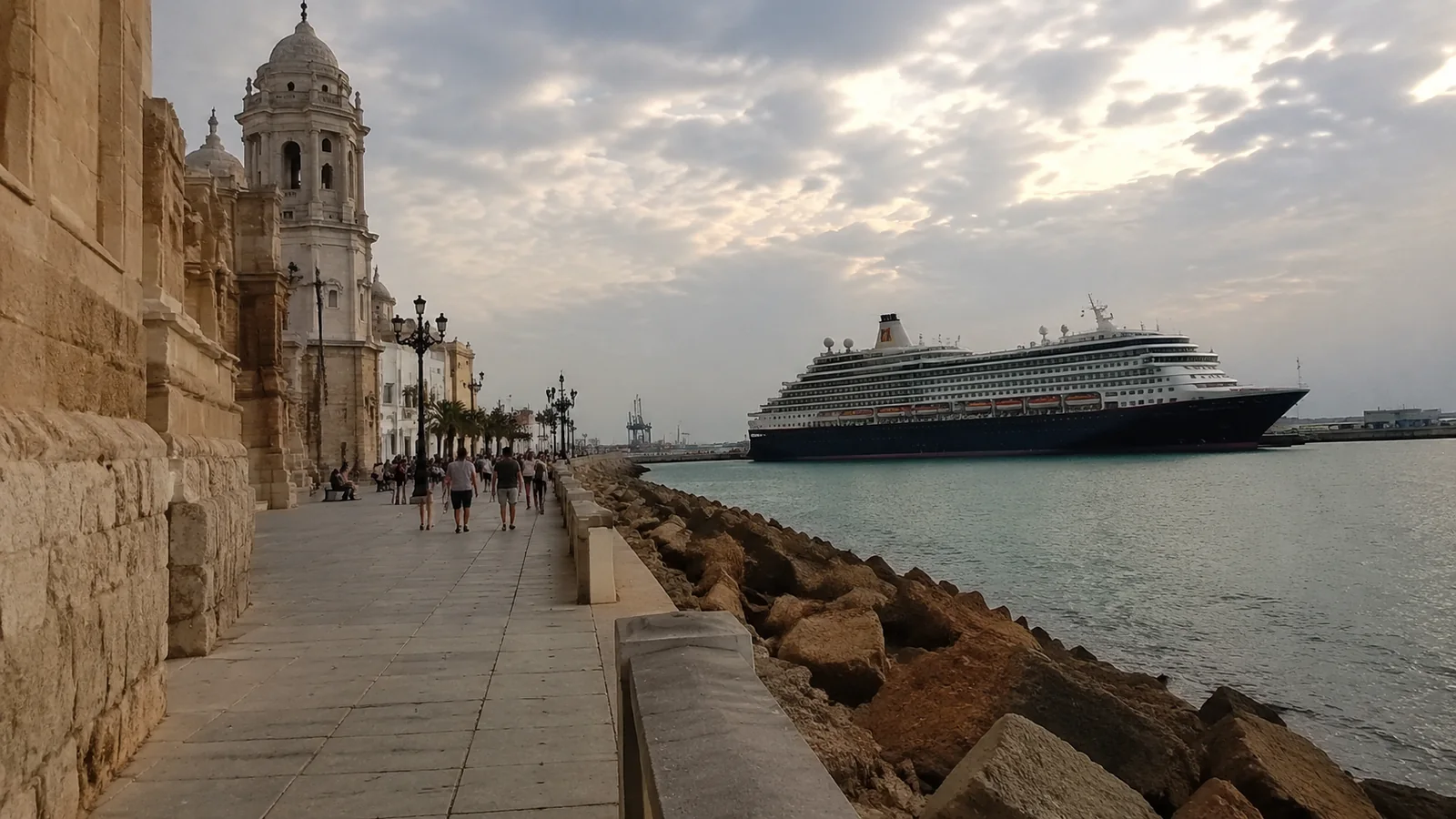
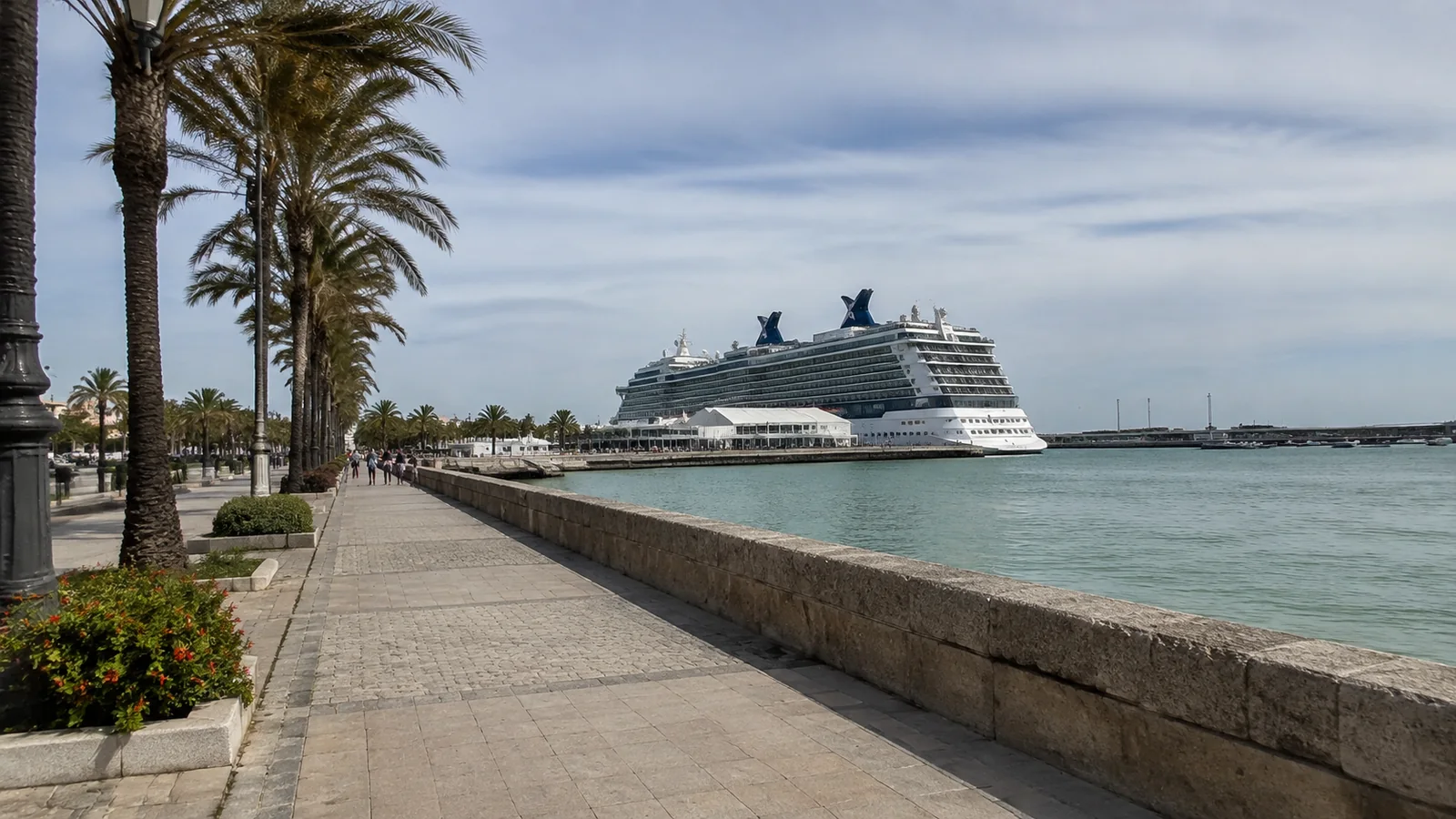
The Port of Cádiz Bay has several passenger-capable berths in the commercial basin, including Alfonso XIII and Muelle Ciudad beside the center. The port authority says the cruise terminal at Alfonso XIII is only about five minutes from downtown.
Your gangway position can still vary with ship size and the day’s traffic. Follow the marked pedestrian route through the secure port area instead of copying a pin from somebody else’s sailing.
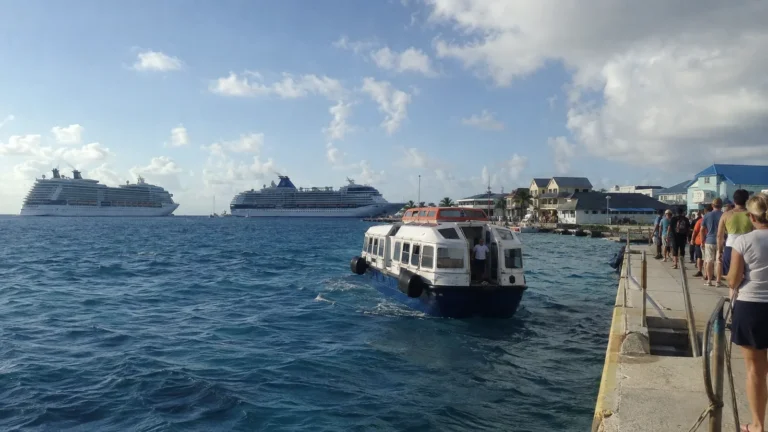
Occasional operational exceptions are always possible, but Cádiz should be treated as a dock-and-walk call. That makes it very different from a tender operation such as George Town in Grand Cayman, where the boat queue must be part of the return plan.
Why Cádiz is unusually easy on your own
The old city sits on a compact peninsula, and the terminal places you near Plaza de San Juan de Dios. You do not need a shuttle just to reach the first sights, restaurants, or shopping streets.
The main compromise is walking surface rather than distance. Old paving, curbs, summer heat, and steps at viewpoints can matter for wheelchairs, scooters, strollers, and anyone with limited stamina.
Cádiz railway station is also close to the port and bus station, which makes regional trips look tempting. The geography is convenient, but a station beside the ship does not eliminate schedule risk farther along the route.
The best one-day walking route in Cádiz
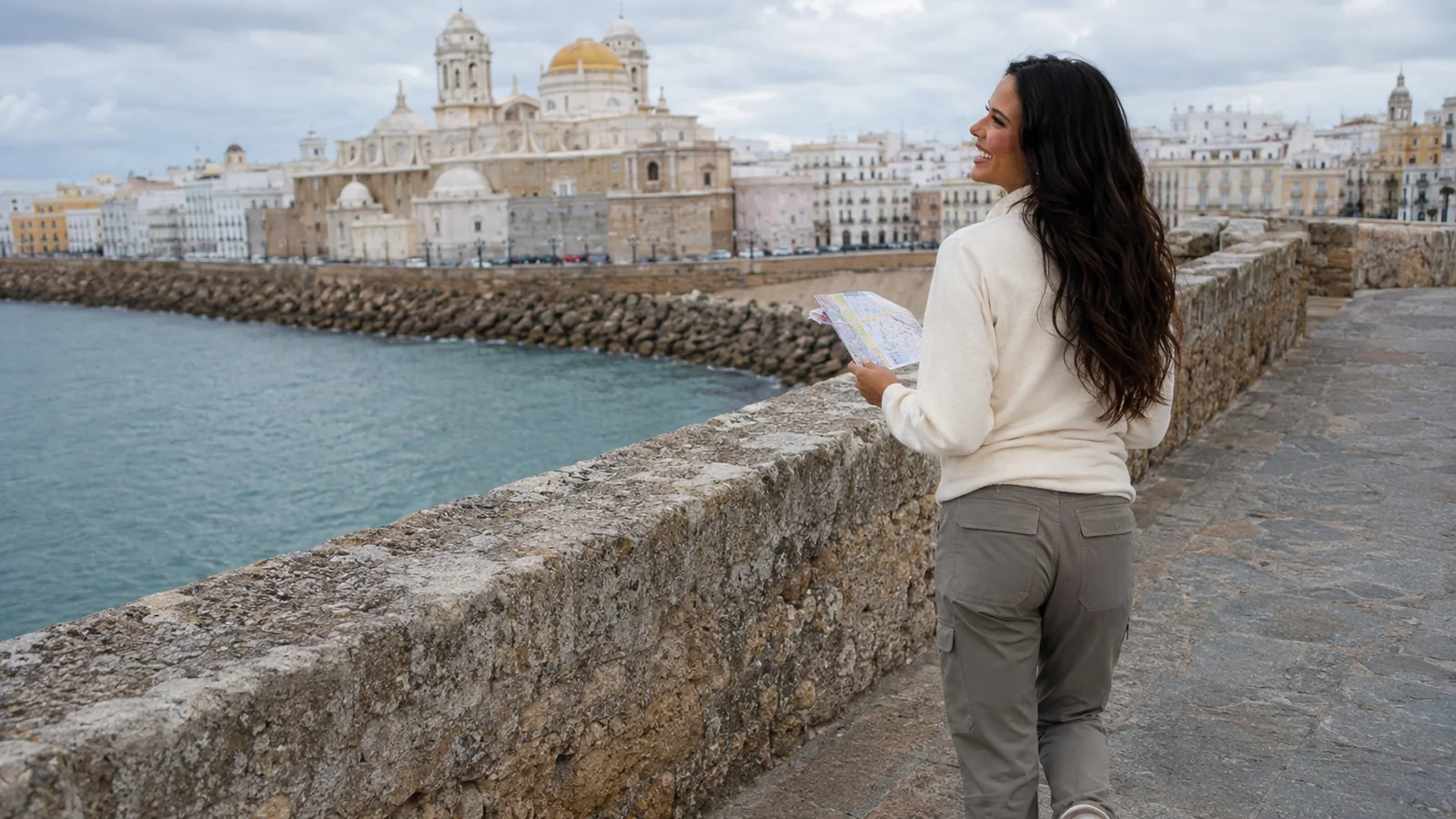
Start at Plaza de San Juan de Dios, then walk into El Pópulo, the oldest quarter. This front-loads the Cathedral and Roman Theatre area before timed visits or midday closures complicate the day.
1. Cathedral and El Pópulo
Cádiz Cathedral’s gold-toned dome dominates the waterfront skyline, and the surrounding lanes reward wandering more than a rushed checklist. The city’s fortifications, seafront, castles, and Roman remains are close enough to combine without a vehicle.
Check current cathedral admission and tower access for your date. Religious services, maintenance, heat, and stair restrictions can change what is practical.
2. Roman Theatre
The Roman Theatre sits within El Pópulo, only a short walk from the cathedral. It is an efficient historical stop because you do not have to cross the city or commit half the day.
Opening days and access areas can change, so verify locally instead of building the entire itinerary around free entry. If it is closed, the surrounding quarter is still worth your time.
3. Central Market and lunch
Continue toward Mercado Central for seafood, produce, and a look at daily city life. Go early enough that you have choices, since individual stalls and food counters do not all follow one schedule.
This is where Cádiz beats a long coach day for many travelers. You can eat well without squeezing lunch between a highway transfer and a timed palace ticket.
4. Tavira Tower
Tavira Tower was the port’s official 18th-century watchtower and is the highest viewpoint in the old city. Spain’s tourism portal describes its camera obscura, which projects a live image of the surrounding city, on the official Tavira Tower listing.
The rooftop requires stairs, while the camera obscura operates in timed sessions and depends on conditions. Reserve if this is your priority, but do not promise the experience to a traveler who cannot manage the access.
5. La Caleta and the seafront
Walk west to La Caleta, the small beach between Santa Catalina and San Sebastián fortifications. It is scenic and close to the old city, but a cruise-day visit is better for a stroll than an elaborate beach setup.
Continue along Campo del Sur for water views and a direct visual line back toward the cathedral side. Turn toward the ship while your legs and clock still feel comfortable.
Can you visit Seville from Cádiz cruise port?
Yes, but only after honest time math. Cádiz and central Seville are about 75 road miles apart, while direct regional trains commonly take around 1 hour 40 minutes in each direction when schedules align.
Add the walk to Cádiz station, pre-departure margin, arrival at Sevilla Santa Justa, local transfer to the monuments, security lines, and the same sequence in reverse. A nominal three-hour rail round trip can become four hours or more of non-sightseeing time.
I would consider independent Seville only with a long call, useful direct trains, flexible tickets, and an earlier backup return. Use Renfe’s live timetable for the exact date because cruise calendars and train schedules do not guarantee each other.
Ship excursion versus independent Seville
A ship excursion costs more and often moves at group pace, but it transfers much of the return-to-ship risk to the cruise line’s organized operation. It is the sensible choice when Seville is nonnegotiable and the port day is only just long enough.
An independent train offers freedom inside Seville, but the ship will not wait for a late public train. A private vehicle reduces station steps, yet traffic or a collision can still close the margin.
How much can you realistically see?
Choose one major ticketed monument, not every icon. The Real Alcázar is a reasonable anchor, with timed tickets sold through the official palace site.
Pair it with a short exterior walk around the Cathedral, Giralda, and Barrio de Santa Cruz. Trying to tour the Alcázar, Cathedral, Plaza de España, and a full lunch usually creates a stressful return rather than a good Seville day.
If your itinerary reaches Cádiz during the repositioning season discussed in our October cruise guide, daylight and monument hours may be tighter than midsummer. A clock change or seasonal timetable is a reason to recheck, not rely on an old screenshot.
Jerez and other easier alternatives
Jerez de la Frontera is a more manageable regional outing than Seville and is known for sherry traditions, equestrian culture, and its historic center. Trains can work, but check the walking distance or taxi need from Jerez station to the exact attraction.
A bodega visit should be reserved directly with the producer because English tours and entry times are limited. Leave enough time to return on a train earlier than the final plausible option.
El Puerto de Santa María is another nearby choice reached by train or seasonal bay transport. It suits seafood and a smaller-town day, though ferry operations can be affected by weather and should never be your only return plan.
Taxis, buses, and trains
For central Cádiz, walking is usually faster than negotiating a vehicle pickup. Taxis are useful for limited mobility, Playa de la Victoria, or a point-to-point regional plan.
Ask for an official taxi, confirm whether the fare is metered or fixed, and clarify waiting time before departure. For a long private tour, get the total price and ship-return target in writing.
Cádiz station serves local, regional, and longer-distance trains, while the adjacent bus station expands the choices. Buy from the operator and verify the service number, station, date, and refund terms instead of trusting a third-party itinerary summary.
Beaches near Cádiz cruise port
La Caleta is the most atmospheric easy beach from the old city, but it is relatively small and tidal. Playa de la Victoria offers a longer urban beach south of the walls, reached by taxi, bus, or a lengthy walk.
Neither beach should be treated like a private cruise resort. Watch posted flags, surf, current, sun exposure, and your belongings, and choose a staffed swimming area when lifeguards are operating.
Atlantic water can feel cool outside summer, which is relevant on the shoulder-season sailings covered in our November cruise planning guide. A beautiful beach walk can still be the right plan even when swimming is not.
Money, language, and connectivity
Spain uses the euro, and cards are widely accepted at formal attractions and restaurants. Carry a modest amount of cash for small purchases, but avoid using a standalone currency-conversion offer that charges your card in dollars.
Spanish is the local language, though visitor-facing businesses often have some English. Download the port area and train details before leaving ship Wi-Fi in case cellular coverage or roaming settings fail.
Entry rules for a Cádiz cruise call
Spain is in the Schengen Area, but the immigration process depends on the cruise’s origin, prior ports, nationality, and itinerary. The ship may retain, inspect, or electronically process documents under procedures that differ from a flight arrival.
Spain’s official entry guidance says a passport generally must remain valid at least three months beyond the planned departure from Schengen and have been issued within the previous ten years. Confirm the rule for every traveler with the cruise line and the Spanish foreign ministry, including visa or authorization changes.
Carry the identification the ship instructs you to take ashore, plus your cruise card and emergency contact details. A photo of a passport is useful backup but not a substitute when the original is required.
How much return buffer do you need?
For a walking day in Cádiz, aim to be back inside the port area 45 to 60 minutes before the ship’s stated all-aboard time. Follow any larger buffer your cruise line requires.
From Seville or Jerez, plan the transportation to reach Cádiz substantially earlier, with at least one viable fallback before the last acceptable service. The exact margin should grow with distance, traffic exposure, mobility needs, and the cost of catching the ship later.
All aboard is earlier than departure. Take a photo of the posted time as you leave, and keep ship time separate from whatever your phone changes automatically.
My verdict: stay in Cádiz or go to Seville?
Stay in Cádiz for calls under about nine hours, first visits, uncertain train schedules, limited mobility, or anyone who wants food and history without a transport project. The port belongs on a list of the world’s best cruise ports precisely because a satisfying day begins almost at the gangway.
Choose Seville on a long call when its monuments are the reason you booked the itinerary, preferably with a ship excursion or a conservative private arrangement. If you have to strip every buffer to make the plan fit, Cádiz is the better day.