Cruise Lines Ranked by Traveler Type, Value and Experience
No cruise line is best for everyone, and a ranking that ignores the traveler is mostly theater. This list gives an overall order for a typical North American ocean-cruise shopper, then shows exactly who should move each line higher or lower.
How I ranked the cruise lines
The overall ranking favors lines with broad itinerary choice, a consistent core experience, useful dining and entertainment, fair value after common extras, and enough cabin options for different groups. I also considered family and adult spaces, solo access, service style, and how much the ship varies across the fleet.
This is not a scientific score or a claim based on sailing every ship. It is an editorial comparison of current products, official inclusions, ship features, itinerary breadth, and the tradeoffs a shopper can verify before booking.
Ultra-luxury, expedition, river, and yacht lines are not direct competitors to a mainstream Caribbean cruise, so I treat them as specialist choices. A much higher fare can buy more space and inclusions, but that does not make it the best value for an ordinary family vacation.
The criteria, in priority order
- Traveler fit: How clearly the product serves its intended guests.
- Itinerary and homeport choice: Whether useful routes exist beyond one region.
- Ship experience: Dining, entertainment, pools, public space, and cabin variety.
- Total-cost value: What the final vacation costs after likely extras.
- Consistency: How closely an older ship matches the brand promise of a newer one.
The ranking assumes a seven-night vacation and no elite loyalty status. If you need a specific port, accessible cabin, school-break date, or adults-only policy, that requirement overrides the order immediately.
1. Royal Caribbean: best overall for broad appeal
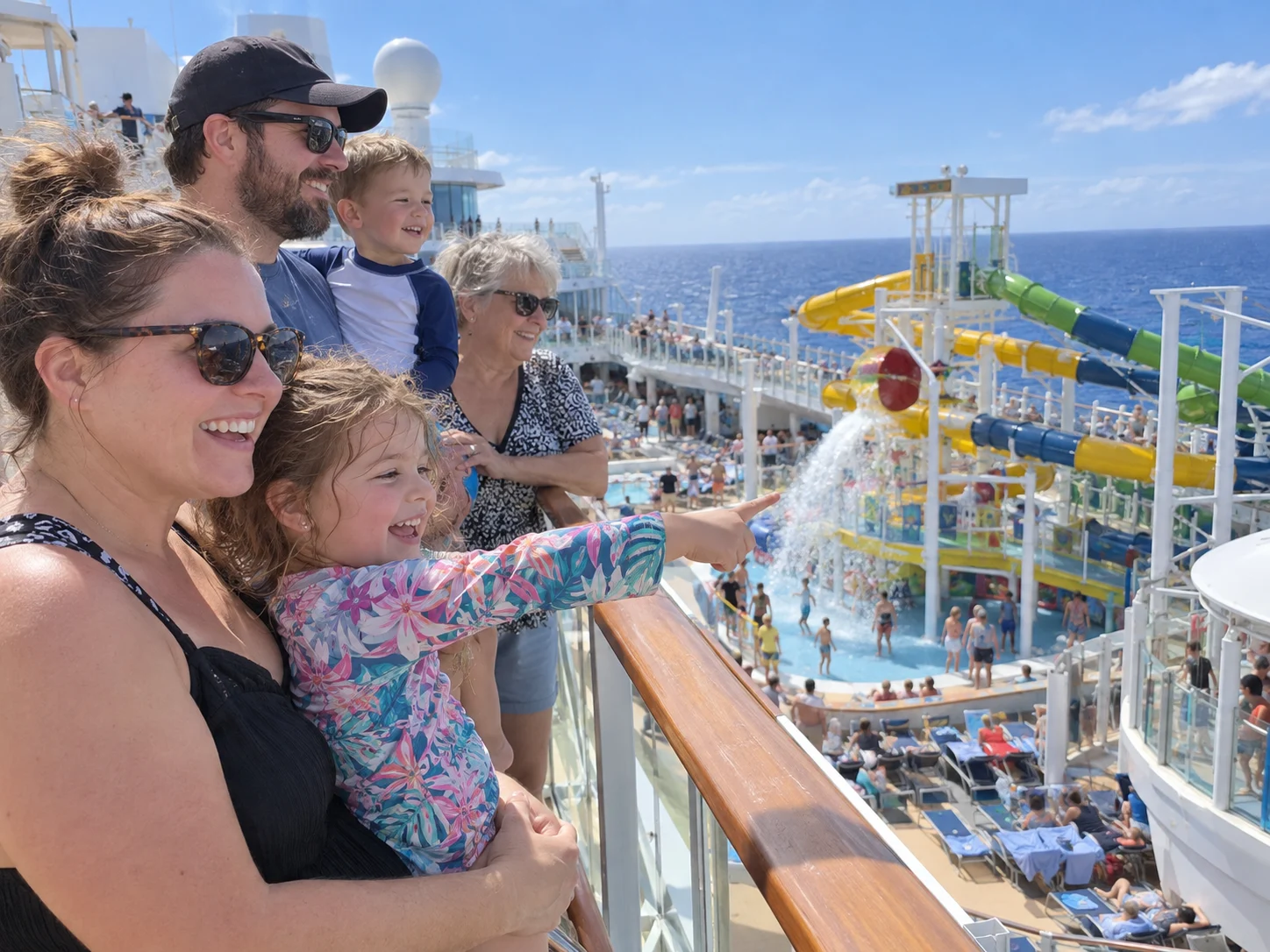
Royal Caribbean earns the top position because it can satisfy multigenerational groups better than most competitors. Large ships combine active attractions, varied entertainment, children’s programming, adults’ spaces, casual dining, and enough public areas for relatives to separate without abandoning the shared vacation.
The line’s current family-cruise information highlights age-specific youth programs and ship-dependent attractions. “Ship-dependent” is crucial because an Icon Class vacation and a smaller, older ship can feel like different brands.
Royal Caribbean drops for travelers who dislike reservations, crowds, large terminals, or a menu of paid upgrades. The newest attraction-heavy ships can also command a premium that makes a quieter competitor better value.
Move it higher if: children, teens, active adults, and grandparents all need different activities. Move it lower if: your ideal day is a quiet lecture, small port, and uncrowded deck.
For the most common head-to-head decision, compare the actual differences in Norwegian versus Royal Caribbean. The right answer often turns on ship layout and fare extras rather than itinerary.

2. Celebrity Cruises: best premium all-rounder for adults
Celebrity is my top premium choice for couples and adult groups who want polished design, strong dining, and an energetic atmosphere without family-resort hardware. It feels more refined than a mainstream mega-ship while remaining accessible enough for a first premium cruise.
Edge Series ships deliver the clearest version of the modern Celebrity product, with dramatic architecture, multiple dining rooms, and a resort-like pool deck. Millennium and Solstice Series ships can still be excellent, but the cabin, venue, and renovation details deserve separate review.
Celebrity is family-friendly, not adults-only, and does not offer the same youth infrastructure as Disney or the largest Royal Caribbean ships. Pricing can also become confusing when retreat suites, drink packages, Wi-Fi, and specialty dining enter the comparison.
Move it higher if: you value contemporary design, food, and a calmer adult-skewing crowd. Move it lower if: children need slides, character programming, or extensive play spaces.

3. Princess Cruises: best balance of destination and tradition
Princess suits travelers who want recognizable cruise traditions without an overly formal or sleepy ship. It combines broad destination coverage, main-stage entertainment, pools, adult-oriented spaces, and a technology-supported onboard experience without making thrill rides the centerpiece.
The line is especially compelling in Alaska because it offers cruise-and-land combinations, established regional programming, and a wide schedule. That strength should not hide the need to compare glacier-viewing days, port hours, and ship features one itinerary at a time.
Princess falls behind Royal Caribbean for high-energy families and behind Celebrity for modern premium design. Its package tiers can simplify drinks, Wi-Fi, dining, and gratuities, but only when the included usage matches your habits.
Move it higher if: Alaska, a longer voyage, or a traditional ship rhythm matters. Move it lower if: nightlife and major onboard attractions drive the vacation.

4. Disney Cruise Line: best for Disney-focused families
Disney does family cruising exceptionally well, with rotational dining, youth clubs, character experiences, Broadway-style entertainment, and adults-only areas under one coherent service model. Its official inclusions page confirms meals, entertainment, pools, recreation, and age-specific youth spaces in the cruise fare.
The limitation is price, especially during school vacations, and the premium only makes sense when the group values Disney’s distinctive programming. A family that plans to skip characters and stage shows may pay heavily for benefits it does not use.
Adults can enjoy Disney without children, but they should want the overall brand atmosphere rather than merely tolerate it. Casino fans also need another line because Disney ships do not build the vacation around gambling.
Move it higher if: children will use the clubs and the family values Disney entertainment. Move it lower if: budget, nightlife, or a non-themed adult atmosphere matters most.

5. Norwegian Cruise Line: best for solo choice and flexible energy
Norwegian is strongest for travelers who dislike fixed dining and enjoy a broad selection of restaurants, bars, entertainment, and casual schedules. Its large ships can support families, couples, and friend groups without requiring a formal cruise style.
Solo travelers have a concrete reason to look closely because NCL offers solo-priced categories and Studio cabins, with Studio Lounge access on selected ships. The line’s official solo-cabin page distinguishes fleetwide solo categories from ship-specific Studio facilities.
The weakness is a fare and package structure that rewards careful reading. Dining credits, drink-package charges, Wi-Fi minutes, shore-excursion credits, and premium attractions can make a “free” promotion feel less simple than expected.
Move it higher if: you travel solo, value flexible dining, or want lively contemporary ships. Move it lower if: you prefer a quiet, highly inclusive fare with minimal booking decisions.
A closer look at who Norwegian suits will help before comparing package totals. Judge the exact ship, because older vessels do not contain every venue advertised across the brand.

6. Virgin Voyages: best adults-only mainstream alternative
Virgin earns the highest specialist recommendation for adults who want child-free ships, flexible restaurant dining, contemporary entertainment, fitness, and less formal tradition. Every sailing is restricted to adults, so the policy covers the whole ship rather than one pool or deck.
The fare includes restaurant dining, essential drinks, basic Wi-Fi, group fitness classes, and entertainment according to Virgin’s current inclusions page. Alcohol, shore excursions, spa treatments, upgraded internet, and retail still cost extra.
For current booking terms, add the separate service gratuity: the VoyageFair FAQ, checked September 5, 2026, lists $20 per sailor per night prepaid or $22 onboard under the policy introduced October 7, 2025. That is $280 prepaid or $308 onboard for two adults on seven nights, so I would include it when comparing fares and check the confirmation for any legacy reservation terms.
Virgin’s unconventional shows, nightlife, app-centered planning, and cabin design are not universally appealing. The fleet and route selection are also smaller than those of long-established mainstream lines.
Move it higher if: adults-only certainty, dining, and modern social energy lead your list. Move it lower if: you want children’s facilities, traditional production shows, a main dining room, or quiet formality.
Use the adults-only cruise comparison to separate Virgin’s lively style from the quieter destination focus of Viking or seasonal adult-only ships. An age restriction tells you who is onboard, not how the vacation feels.

7. Holland America Line: best for calm, classic cruising
Holland America fits travelers who prioritize comfortable public rooms, live music, dining, longer itineraries, and destination time over water parks or all-night parties. Its ships are large enough to offer variety while generally feeling more manageable than the newest mega-ships.
The line is particularly credible for Alaska, longer voyages, and mature multigenerational groups whose children do not need constant thrill attractions. Current entertainment is evolving across the fleet, which makes the exact ship and sailing date more important than an old review.
It ranks lower overall because its quieter rhythm and limited high-adrenaline hardware narrow the audience. Families with young children can sail, but the brand is not built around them.
Move it higher if: ports, live music, and a traditional atmosphere matter. Move it lower if: the group expects water slides, late-night clubs, or a huge teen scene.

8. Carnival Cruise Line: best for social value and homeport access
Carnival is easy to underestimate because its lively reputation overshadows a practical strength: many accessible homeports and an uncomplicated, casual vacation. Comedy, deck parties, included casual food, youth programs, and short itineraries make it a useful option for budget-aware groups.
The line’s biggest challenge is consistency across ships and sailing lengths. A newer Excel Class ship on a weeklong itinerary offers a different range of dining and public spaces from an older vessel on a weekend route.
Short holiday sailings can attract a louder crowd, but that is not a reliable description of every Carnival cruise. Route, length, school calendar, ship, and price all influence the atmosphere.
Move it higher if: a nearby departure, comedy, casual fun, and value matter. Move it lower if: you seek subdued evenings, premium service, or highly inclusive pricing.
9. MSC Cruises: best for international style at an aggressive fare
MSC can deliver handsome ships, family facilities, late private-island stays, and competitive fares from several U.S. homeports. The onboard mix often feels more international than a U.S.-centered competitor, which some travelers find refreshing.
Its fare experiences, drink rules, dining expectations, and service style require careful reading. A low base price can remain a bargain, but only after the shopper adds the exact experience tier, gratuities, drinks, and desired dining.
MSC ranks lower for first-timers because expectations can be mismatched, not because the ships lack appeal. Travelers who understand the product can move it several places higher based on price and itinerary.
Move it higher if: you enjoy multinational crowds, modern ships, and value shopping. Move it lower if: you want highly personalized service or a familiar American cruise rhythm.

10. Viking Ocean: best destination-focused premium specialist
Viking is last only because this overall ranking centers on broad mainstream fit. For adults who value smaller ships, lectures, included shore access, quiet design, and fewer onboard sales prompts, it can be the first choice.
Viking Ocean ships are adults-only, have no casino, and include Wi-Fi, alternative dining, and beer and wine with lunch and dinner under the line’s current product description. Those inclusions make total-cost comparison more favorable than the headline fare suggests.
The tradeoffs are a higher starting price, no children under 18, limited nightlife, and little interest in family-resort attractions. It is a focused product, which is why loyal guests value it and why it cannot top a general family ranking.
Move it higher if: destinations, calm spaces, and included essentials matter. Move it lower if: children, casinos, nightlife, or a low entry fare are required.
Best cruise line by traveler type
- Multigenerational family: Royal Caribbean
- Disney-focused family: Disney Cruise Line
- Premium couple: Celebrity Cruises
- First Alaska cruise: Princess, with Holland America close behind
- Solo traveler: Norwegian, after checking the exact single supplement
- Adults-only social trip: Virgin Voyages
- Quiet destination-focused adult: Viking Ocean
- Drive-to value: Carnival or the best locally available line
- International atmosphere and low fare: MSC
- Classic longer voyage: Holland America
These winners are starting points, not booking instructions. A weak itinerary on the “right” line is still a weak vacation.
How to build your own ranking
Choose three nonnegotiables and two preferences. Nonnegotiables might include an accessible cabin, a school-break week, a specific embarkation port, a maximum total budget, or a minimum age policy.
Then price one real sailing from each surviving line, including taxes, gratuities, drinks, Wi-Fi, dining, excursions, air, hotel, and transfers. This is where an apparently expensive inclusive line can beat a discounted base fare.
The framework in this all-inclusive cruise comparison helps identify costs hidden by unlike fare structures. Never compare a cruise-only cabin with a bundled suite or included-air package.
Finally, inspect the ship rather than the logo. Review its deck plan, refurbishment details, cabin adjacency, included dining, reservation system, and the facilities available to each traveler’s age.
Ranking mistakes to avoid
- Choosing a line before choosing the destination and dates
- Assuming every ship in a fleet has the newest attractions
- Ranking by base fare instead of final vacation cost
- Using one bad meal or viral video to judge an entire brand
- Confusing adult-skewing with a guaranteed adults-only policy
- Ignoring port times because the ship looks exciting
- Overvaluing loyalty status on an itinerary that does not fit
If you are new to cruising, these first-time cruise checks will help turn a shortlist into a real booking comparison. The goal is not to defend a winning brand, but to find the trip with the fewest important compromises.
My bottom line
Royal Caribbean is the strongest all-around recommendation because it solves the hardest group problem: different ages wanting different vacations on one ship. Celebrity and Princess follow for adults who want a more balanced or destination-led experience, while Disney, Norwegian, Virgin, Holland America, Carnival, MSC, and Viking each become number one for a narrower traveler.
Use the overall ranking only until your priorities are clear. Once you know your route, group, budget, and preferred atmosphere, the best cruise line should feel less like a winner and more like an obvious fit.