
The most useful cruise cabin hacks happen before you unpack. Save proof of the exact ship, sailing-era deck plan, category, occupancy, and room features, then recheck them whenever the booking changes.


Hack 1: Build a Cabin Receipt
Create one note with the ship name, sailing date, cabin number, category code, fare type, passengers, bedding, view, connection status, and accessibility features. Add screenshots or a PDF from the official plan that applies to the sailing.
Marketing names are not enough because layouts and benefits can vary by ship and stateroom. The official deck-plan method shows why adjoining rooms, obstructions, elevators, stairs, and accessible rooms need exact-plan verification.
Record what is promised
Copy the room description and booking terms into the note rather than relying on memory. If a balcony, sofa bed, tub, second bathroom, internal door, or suite benefit matters, ask for written confirmation tied to the exact category.

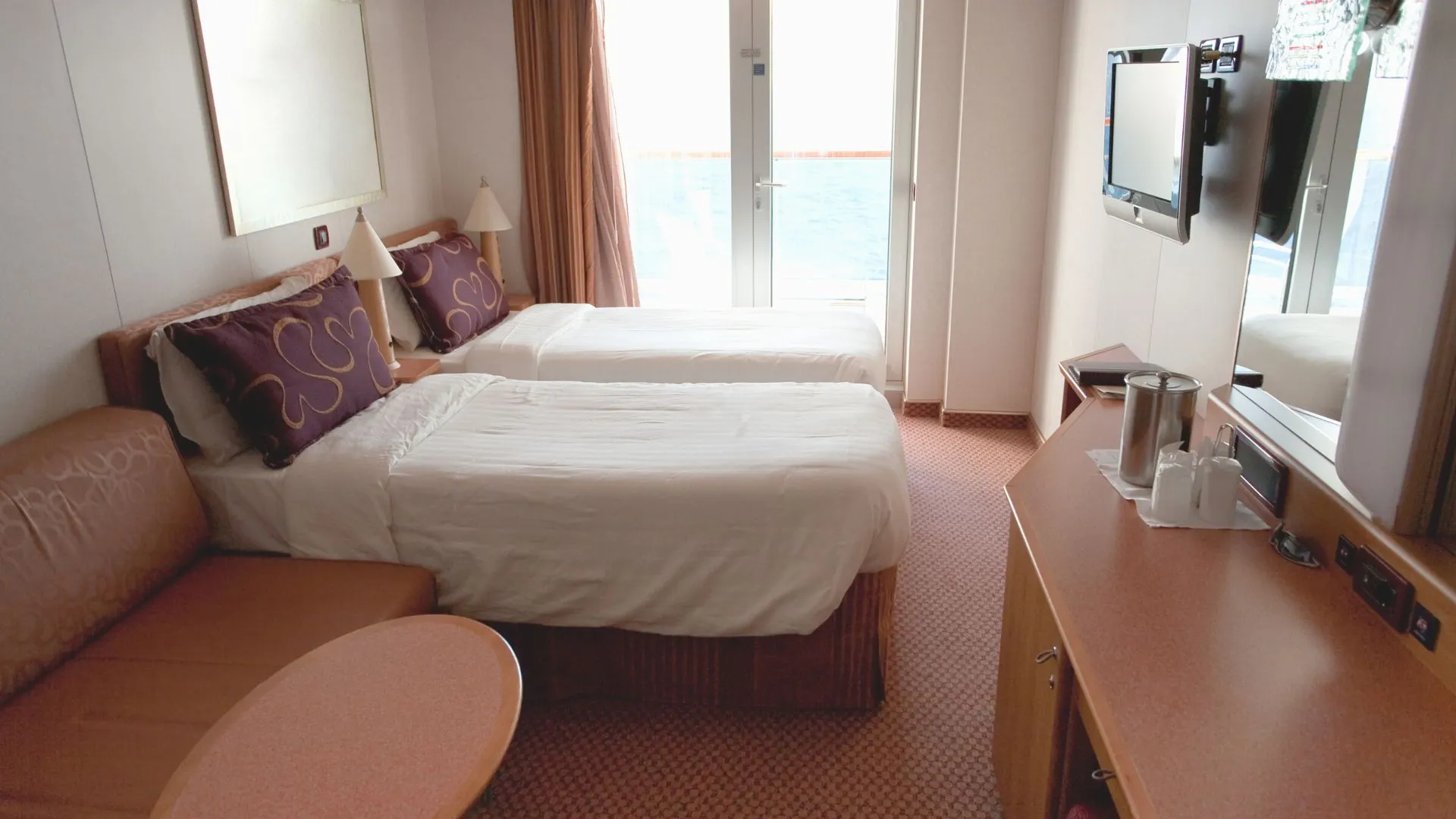
Recheck after every change
A ship swap, refurbishment, upgrade, guarantee assignment, cabin move, fare change, or passenger change can alter the answer. Compare the new confirmation with the saved receipt immediately.
Hack 2: Inspect Three Decks
Locate the cabin on its own deck, then inspect the same coordinates directly above and below. Look for public venues, open decks, pools, theaters, restaurants, service-looking spaces, connecting symbols, and changes in corridor shape.
Adjacency shows possible exposure, not proven noise. Never invent venue hours, hidden machinery, or decibel levels from an unlabeled rectangle.


Balance convenience against sleep
Elevators and stairs can reduce daily walking, especially for someone with limited stamina. A light sleeper may assign more weight to distance from a busy venue, while another traveler may gladly accept activity nearby.
Trace the route you will repeat
Map the cabin to dining, childcare, medical facilities, pool, theater, and the gangway areas typically used by the ship. Do not choose “midship” as an abstract virtue when every priority lies elsewhere.
Hack 3: Decode Every Symbol
Read the legend on the exact plan rather than using a symbol key from another line or ship. Symbols can separately represent connection, occupancy, accessible design, bed type, sofa bed, upper berths, obstruction, and nonconvertible bedding.


Check beds, not capacity alone
A room that accepts four guests may use two lower beds plus an upper berth and sofa. Confirm who can use each sleeping surface and whether the lower beds can be arranged as requested.
Do not infer a connecting door
Adjacent cabin numbers do not prove an interior connection. Confirm the connecting symbol, book both rooms, and verify that the door joins the exact pair.
Hack 4: Treat Guarantee Rates as a Trade
A guarantee booking can reduce location control. Norwegian currently describes guarantee products that may be assigned across multiple decks close to embarkation, with some oceanview or balcony guarantees allowing partial or full obstruction.
Read the exact line and fare terms rather than applying that example universally. The current NCL deck-plan descriptions show why “category or better” does not promise the location, sightline, or layout you personally prefer.


Skip guarantee when a need is nonnegotiable
Select a specific compatible room when accessibility, connection, bedding, obstruction, location, or supervision must be preserved. Do not buy a guarantee as an upgrade strategy.
Accept it only with a broad comfort range
A guarantee can fit when every possible assignment permitted by the terms is acceptable. Price savings matter only after you understand what control is surrendered.
Hack 5: Verify the View
“Oceanview,” “balcony,” and “unobstructed” do not describe every sightline. Princess warns that plans and typical diagrams can change and that nautical items may not count as obstructions in the same way travelers imagine.
Use the current ship plan, then ask whether the view forward, outward, downward, or toward the horizon is blocked. Avoid turning a category label into a promise of a perfect panorama.


Hack 6: Handle Accessibility Function by Function
An accessible symbol is a starting point. Confirm doorway, turning space, bathroom, transfer side, bed clearance, balcony threshold, emergency route, equipment storage, and the assistance the line can provide.
Carnival uses separate room designations for fully accessible layouts, single-side-approach layouts, and ambulatory access. That example proves why the word accessible cannot replace a functional conversation with the booked line.


Do not book an accessible room as a space hack
These rooms are designed for travelers who need their features. Extra floor area is not a reason to remove scarce inventory from the people it serves.
Hack 7: Compare Family Layouts Before Price
For families, compare one suite with two connecting rooms and two nearby nonconnecting rooms. Record total beds, lower beds, bathrooms, privacy, internal-door status, supervision, included benefits, and the complete fare.
Connecting rooms can improve separation and bathroom count, while a suite can improve shared space. Neither product wins until the exact ship, categories, occupants, and price are matched.


Hack 8: Use a 24-Hour Change Audit
Whenever a cabin changes, repeat the three-deck check, legend check, occupancy check, sightline check, and route check within a day. Fast verification gives you more time to ask questions while alternatives may remain.
Do not assume an upgrade is better. A higher category can introduce a worse route, unwanted connection, changed bedding, obstruction, or location beside a venue.
Hack 9: Prepare the Cabin Without Rule-Breaking Shortcuts
Review the line's current prohibited-items and electrical rules before packing organizers, adapters, cords, appliances, magnets, or decorations. A tip repeated online is not permission from your operator.
Use the cruise floor-plan guide for detailed symbol decoding and the cruise packing tips as a packing prompt. The cruise planner can hold the cabin receipt and change audit.


Cabin Hack Audit Before Final Payment
Confirm every traveler still fits
Passenger changes can affect occupancy rules even when the room number stays the same. Verify the revised names, ages, bed arrangement, and category eligibility before assuming the original layout still works.
Check the cabin against the itinerary
A balcony may receive more use on a scenic route, while a port-intensive trip can make location and sleep more valuable than living space. Reconsider the score when the itinerary changes materially.
Review the fare, not only the room
Confirm deposit, final payment, cancellation terms, included packages, gratuities, and any upgrade restrictions. A cabin move that appears free can alter benefits or fare conditions.
Verify the bathroom and storage
Ask exact questions only when bathroom configuration, equipment storage, or luggage placement determines whether the room works. A typical category photo cannot establish every clearance or shelf.
Protect family supervision
Confirm whether connecting doors can remain open, how corridor-separated rooms affect supervision, and which adult occupies each booking. Do not assume the line permits a preferred child-room arrangement.
Plan for conflicting sleep schedules
Identify whether a sofa bed blocks movement, an upper berth changes headroom, or late-night bathroom use crosses another sleeping area. Shared square footage matters less than usable nighttime circulation.
Question any unnamed space
Ask what the line can verify beside the cabin, then record uncertainty honestly. Choose a cabin bordered by labeled passenger rooms when an unresolved adjacency would create persistent worry.
Save the final confirmation offline
Keep the booking, plan, access notes, and promised features available without internet. If the onboard room differs materially, clear documentation makes the conversation more precise.
Pack around the verified room
Bring organizers only after understanding the actual storage and operator rules. Extra products create clutter when the room already provides suitable hooks, shelves, drawers, or charging locations.
Final Cabin Hack
The smartest hack is preserving control over the details that matter while remaining flexible about everything else. That distinction keeps a small preference from becoming an expensive booking constraint.
Review the cabin receipt at booking, final payment, assignment, and check-in. Those four checkpoints catch more expensive mistakes than a collection of unverified secret-room tips.
When the answer remains uncertain, decide whether the uncertainty is tolerable before paying. Do not assume onboard staff can recreate sold-out inventory.
Audit the booking conversation
Write down who confirmed each decision-critical feature, when it was confirmed, and where it appears in the operator material. A phone summary is helpful, but the current written plan and confirmation should remain the reference.
Check upgrade consent
Ask whether automatic or complimentary changes can move the cabin and how preferences are recorded. A category increase can still undermine a chosen connection, route, sightline, or bed plan.
Review travel-agent records
If an adviser manages the booking, make sure both copies show the same room, fare, passengers, dining, access requests, and contact details. Resolve mismatches before final payment.
Keep one acceptable backup
Identify a second cabin or category that meets every nonnegotiable. A fallback makes a ship change or reassignment easier to evaluate without accepting the first proposed alternative.
Check embarkation assignment
Guarantee guests should repeat the audit as soon as a number appears, even if that happens close to sailing. Save the assigned plan and inspect its actual relationships.
Do not chase a secret room that is supposedly perfect for everyone. Save the evidence, verify the exact plan, and choose the tradeoffs that protect your own sleep, movement, view, party, and budget.

Ellie is the founder of Ellie's Travel Tips, where she shares practical cruise tips, port guides, and step-by-step itineraries to help you plan smarter trips for less. Her checklists and packing guides turn travel daydreams into doable plans.