
How to Choose a Sunset Cruise for the Place and Conditions
A sunset cruise is a boat trip first and a sunset view second. Compare the exact location, calculated solar time, vessel, route, exposure, boarding, accessibility, inclusions, and cancellation terms without expecting a clear horizon or guaranteed color.
Calculate for the exact place and date
The United States Naval Observatory's Sun and Moon data service calculates sunset and civil twilight for supplied coordinates and a date. Time zone and daylight-saving inputs matter, and the result does not predict cloud, smoke, haze, horizon obstruction, vessel heading, or visibility.


Use a live marine source
The National Weather Service publishes marine forecasts and hazards by United States office and zone. Elsewhere, use the responsible national or local marine authority, and let the licensed operator make the operational decision without treating a forecast as a guarantee.


Vessel category matters
The International Maritime Organization's passenger-ship standards overview explains international safety and pollution frameworks while noting that different craft fall under different systems. A sunset-cruise label alone does not certify one operator, domestic small craft, boarding route, or traveler fit.


Define the experience being sold
Separate sailboat, motor launch, dinner boat, entertainment vessel, traditional local craft, private charter, paddle trip, and cruise-line shore excursion. Each product has different movement, shelter, capacity, sound, service, boarding, and operator responsibilities.
Read the exact listing and written terms rather than filling gaps from photographs. A picture cannot establish current vessel, seating, toilet, food, alcohol, accessibility, route, duration, sunset position, or cancellation policy.


Use a traveler-fit score
Score boarding, seating, shelter, restroom, motion exposure, noise, food, alcohol, narration, child rules, sensory load, photography space, mobility chain, and cancellation resilience. Weight only what matters to the traveler instead of ranking boat types globally.
A lively dinner cruise can be right for a celebration and wrong for someone seeking quiet. A small sailboat can feel intimate to one passenger and physically unsuitable to another.


Sailing vessel tradeoffs
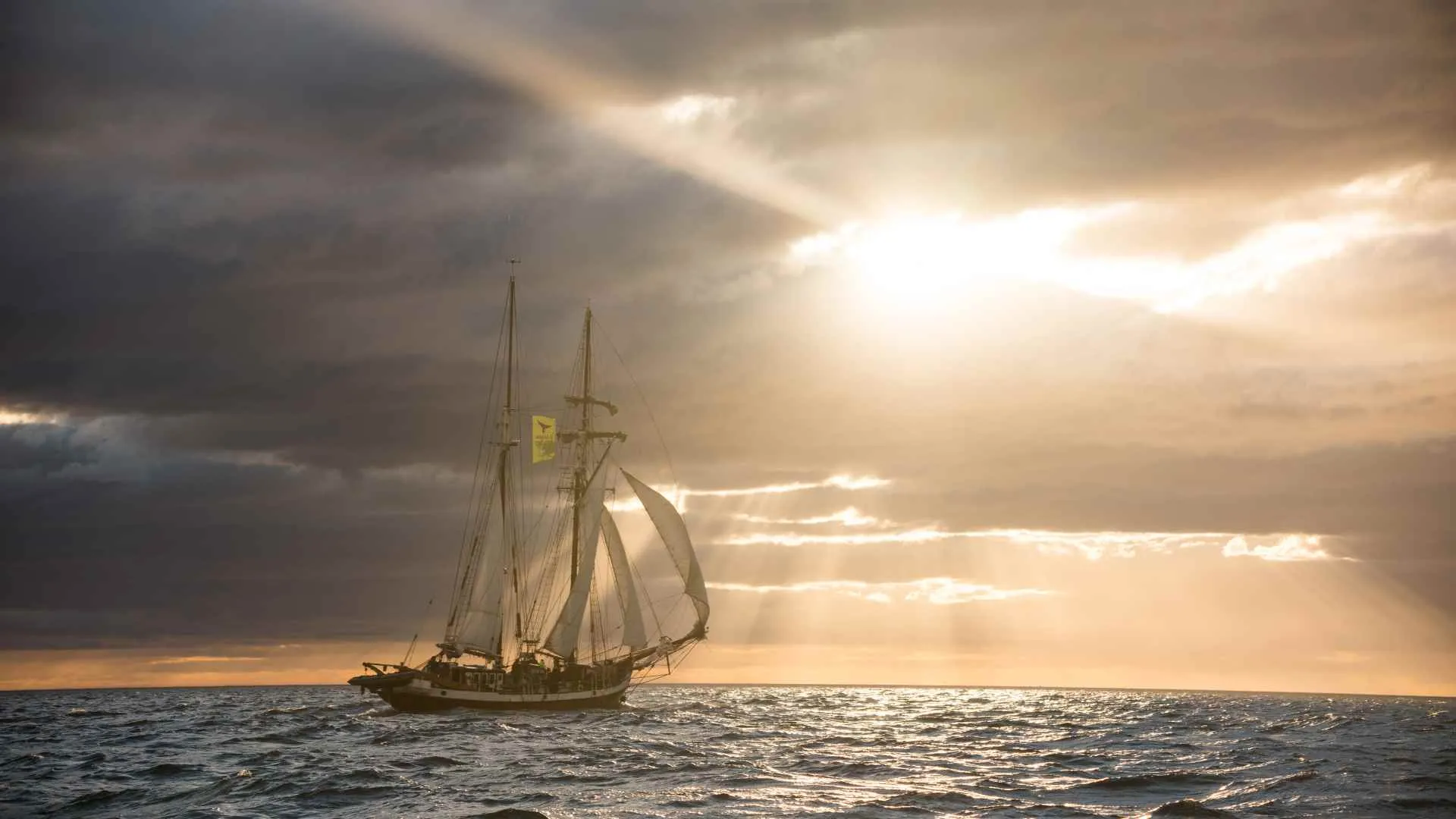
A sailing trip may emphasize wind, rigging, a quieter engine profile, and participation, but operation depends on the vessel and conditions. Ask whether the trip sails, motors, or combines both, and whether passengers must move during maneuvers.
Check seating, shade, spray, railings, toilet, steps, footwear, and assistance. Do not promise silence, smooth motion, privacy, or a particular sail plan.


Motor-vessel tradeoffs
A motor vessel may offer a predictable operating envelope, shelter, stable seating, or a larger cabin, but size alone does not settle comfort. Engine noise, exhaust exposure, deck access, capacity, and route differ.
Ask where passengers may stand and how crew manage movement around sunset. Never encourage changing sides, blocking aisles, or leaning outside rails for a view.


Dinner and entertainment boats
Food, music, narration, dancing, or a themed program can be the main value even if the horizon is cloudy. Confirm menu, allergy process, seating assignment, sound level, dress guidance, service format, alcohol terms, and what ticket tier includes.
Do not assume a meal, open bar, live band, window seat, gratuity, Wi-Fi, or celebration service. A traveler with dietary or sensory needs should receive an exact operator answer.


Traditional and locally specific craft
A locally important vessel can add history and interpretation, but traditional does not mean unregulated, authentic for everyone, comfortable, or accessible. Learn who operates it, under what current rules, and how visitors board.
Avoid romanticized claims about culture or crew identity. Focus on documented vessel history, present operation, respectful conduct, and the traveler's actual needs.


Paddle trips require a separate test
Kayak, canoe, and paddleboard outings involve immersion risk, physical effort, equipment fit, launch access, visibility, temperature, and a return in fading light. They are not simply smaller versions of a passenger boat.
Use a qualified local operator and follow its experience, age, swimming, equipment, weather, and guide requirements. Do not prescribe independent after-dark paddling or promise calm water.


Private charter tradeoffs
A charter can offer schedule and group control, but it does not create control over weather, harbor rules, sunset visibility, crew decisions, or wildlife. Confirm licensed capacity, price structure, deposit, route boundaries, food, alcohol, accessibility, and cancellation terms.
Put requested features in the written agreement without assuming verbal flexibility. Privacy may still be limited by public waterways, marinas, nearby boats, and operational requirements.


Calculate the relevant solar window
Use the exact embarkation location or route coordinates, date, and correct time zone to find sunset and civil twilight. Then compare the operator's stated check-in, departure, route, and return schedule.
Do not invent a universal departure offset or arrival lead time. Terrain, harbor speed, locks, traffic, briefing, boarding, and the vessel's lawful route can change when the horizon becomes visible.


Separate sunset from visible sunset
Astronomical sunset describes the Sun's position relative to the horizon under a calculation model. Cloud, mountains, buildings, islands, haze, smoke, rain, and vessel orientation affect what passengers actually see.
Choose a trip with value beyond color, such as skyline, coast, interpretation, meal, or time together. No destination or season guarantees a clear disk or dramatic sky.


Read the marine conditions
Check the responsible marine forecast, harbor notices, local warnings, and operator update near departure. Wind direction, swell, current, thunderstorms, fog, temperature, heat, smoke, and visibility can change comfort or operation.
The operator decides whether and how the trip runs under its authority and terms. A passenger should not pressure crew to depart, extend, change course, or remain exposed for a sunset.


Trace boarding end to end
Map parking or transfer, dock entrance, ticket point, ramp, gangway, steps, boarding gap, cabin, deck, seat, toilet, and return after twilight. Ask about lighting and handrails without assuming a waterfront is level.
Share mobility-device dimensions and assistance needs with the operator. Accessible parking or a step-free pier does not prove the vessel, restroom, seating, and emergency arrangements fit one traveler.


Check motion and medical fit
Vessel size, hull, route, speed, wind, and water conditions affect motion, but no craft guarantees comfort. Someone concerned about motion sickness or another condition should seek appropriate personal guidance rather than rely on a generic remedy.
Keep essential medicine accessible within provider rules and avoid alcohol assumptions. A short advertised outing can still involve waiting, boarding, and exposure.


Pack for the operator and conditions
Use the operator list and live conditions to choose layers, sun protection, rain protection, secure footwear, and a small permitted bag. Protect electronics from spray without promising a case is waterproof.
Avoid loose accessories around wind and equipment, and keep hands available for boarding. Do not bring outside food, alcohol, glass, drones, smoking materials, pets, or swimming gear without written permission.


Plan photography without disrupting others
Practice low-light settings, clean the lens, secure the camera, and remain in permitted areas. A compact setup can be more manageable than switching lenses on a moving deck.
No side of a boat is permanently best because the route, heading, seating, crowd, and horizon change. Take turns at shared viewpoints and follow crew instructions.


Read inclusions line by line
Confirm taxes, fees, food, drinks, equipment, narration, seating, transport, photographs, gratuity, and optional purchases from the exact fare. A word such as premium or luxury does not define what is included.
Check age bands, minimum participation, group size, private-versus-shared status, and extra charges without publishing a fixed price. Currency and payment terms may also matter.


Understand cancellation and lateness
Read weather cancellation, operator cancellation, customer cancellation, rescheduling, no-show, late arrival, minimum participation, and refund language before payment. Save the current terms tied to the booking.
Do not assume rain triggers a refund or that a missed departure can be moved. Keep a shore-based alternative and meal plan that do not depend on reimbursement.


Build a weather-resilient fallback
Choose a lawful waterfront walk, viewpoint, observatory, indoor venue, or later meal only after checking local access, hours, transport, and weather. A fallback should be worthwhile even if twilight is muted.
Avoid rushing between a canceled dock departure and a distant viewpoint. Simpler local options reduce new dependencies without guaranteeing access or safety.


Protect the return after dark
Map the lit route from the vessel to the approved pickup, parking, hotel, ship, or transit stop and verify the service still runs after return. Consider group communication, phone power, local transport, mobility, and any controlled marina exit.
Do not assume a waterfront remains busy, staffed, accessible, or easy to navigate after twilight. Follow operator and local instructions and arrange an appropriate transfer when the walking route is unresolved.
Choose by scenario
For a quiet nature-oriented evening, prioritize low noise, interpretation, small capacity, and no-sunset value. For a group celebration, prioritize seating, accessibility, food clarity, sound, and cancellation terms instead.
For photography, prioritize lawful deck access, space, route, and weather flexibility rather than a promise of color. For families, confirm child-specific lifejacket, supervision, toilet, food, and timing details directly.

Final comparison
Compare two or three exact operators using the same criteria and current documents. Recheck vessel, dock, time, weather contact, boarding, access, inclusions, restrictions, and cancellation terms before departure.
Use the honeymoon cruise guide for celebration tradeoffs, the Iceland port guide for weather-dependent shore planning, the cruise timing guide for broader season questions, and the Disney packing guide for a contrasting family travel context.

Ellie is the founder of Ellie's Travel Tips, where she shares practical cruise tips, port guides, and step-by-step itineraries to help you plan smarter trips for less. Her checklists and packing guides turn travel daydreams into doable plans.