Greek Islands Cruise Guide: Routes, Ships, Ports and the Best Time to Go
A Greek islands cruise can mean whitewashed Cyclades villages, Venetian Corfu, medieval Rhodes, Minoan Crete, or a heroic attempt to fit all four into seven nights. The smartest choice begins with route geography, ship size, and port access, not the prettiest Santorini sunset in the brochure.
What counts as a Greek islands cruise?
There is no single standard circuit. The official Visit Greece island overview divides the country into groups including the Cyclades, Dodecanese, Ionian Islands, Crete, North Aegean, Sporades, and Argosaronic islands.
Most mainstream “Greek Isles” itineraries concentrate on the Aegean and may mix Greece with Turkey. Eastern Mediterranean cruises can add Italy, Croatia, Montenegro, Cyprus, or Israel when cruise lines and current conditions permit.
Read the port list rather than relying on the voyage name. A cruise marketed around Greece might include only two Greek calls, while a small ship with less dramatic branding could visit a different island almost every day.
Choose the route before the cruise line
Cyclades route
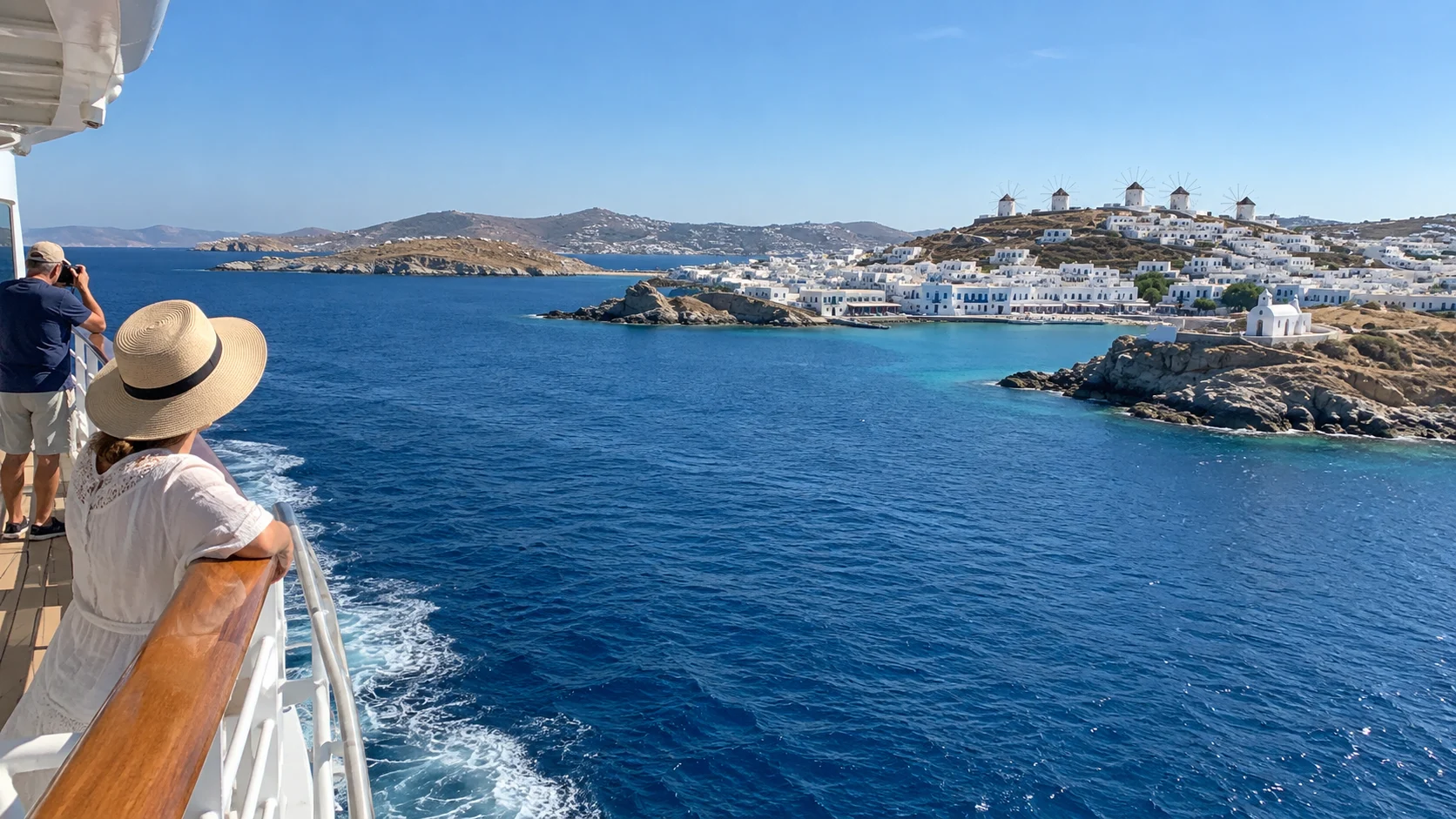
Santorini and Mykonos are the familiar Cyclades pairing, sometimes joined by Milos, Paros, Syros, or smaller islands on ships able to use them. Choose this route for caldera views, whitewashed lanes, beaches, nightlife, and dry Aegean scenery.
The tradeoff is operational fragility. Wind, limited berths, tenders, narrow streets, and several ships arriving together can turn a postcard day into a transportation puzzle with excellent feta.
Dodecanese and eastern Aegean route
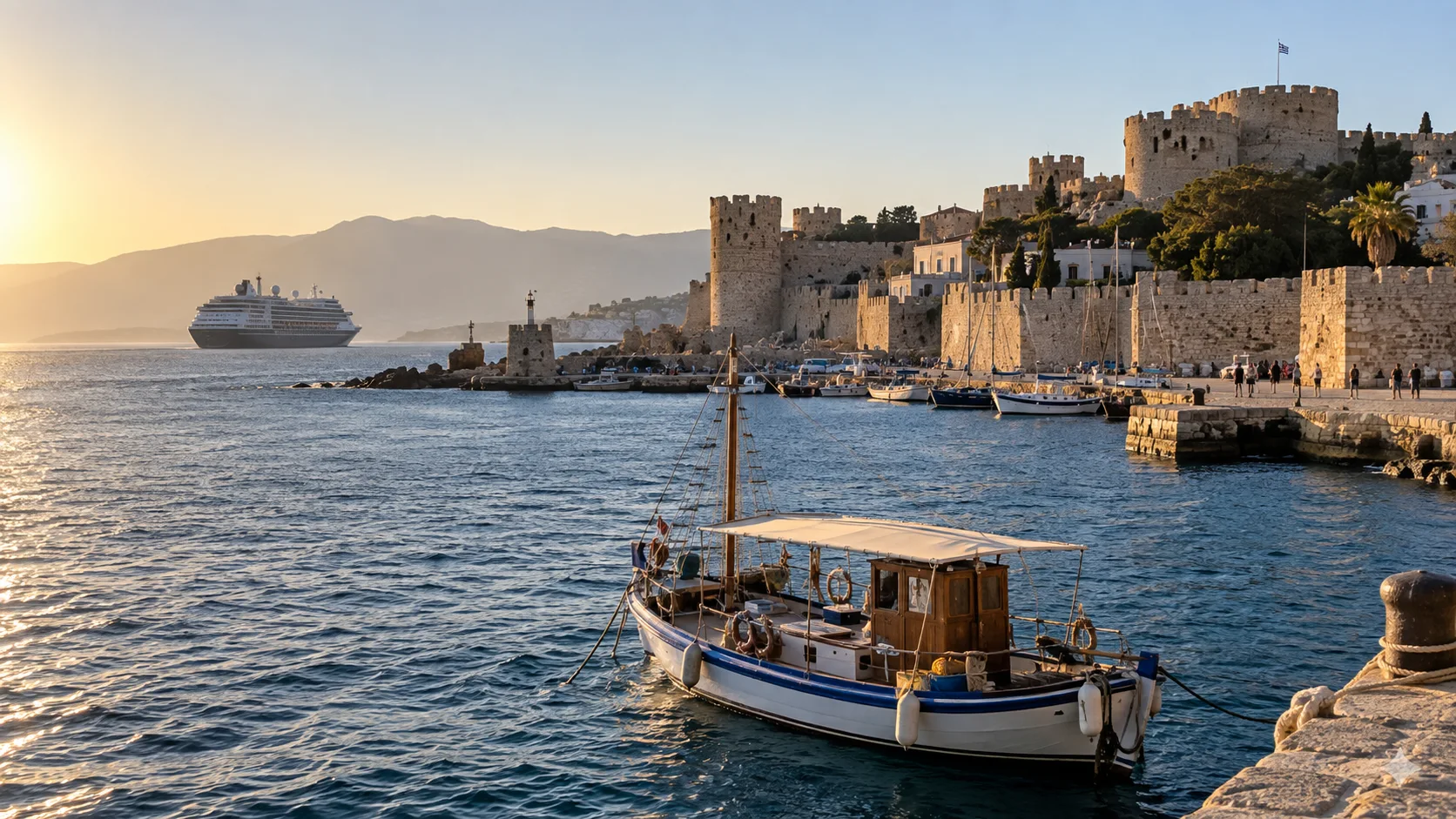
Rhodes is the anchor for many southeastern routes, with Patmos, Kos, or other islands appearing more often on smaller vessels. Turkey’s Kusadasi or Bodrum may be included because the coast is close, but that creates another country’s entry rules, currency choices, and excursion logistics.
Rhodes works especially well for independent sightseeing because the medieval city sits close to the cruise harbor. Patmos provides a quieter contrast, although tendering and steep terrain can complicate mobility.
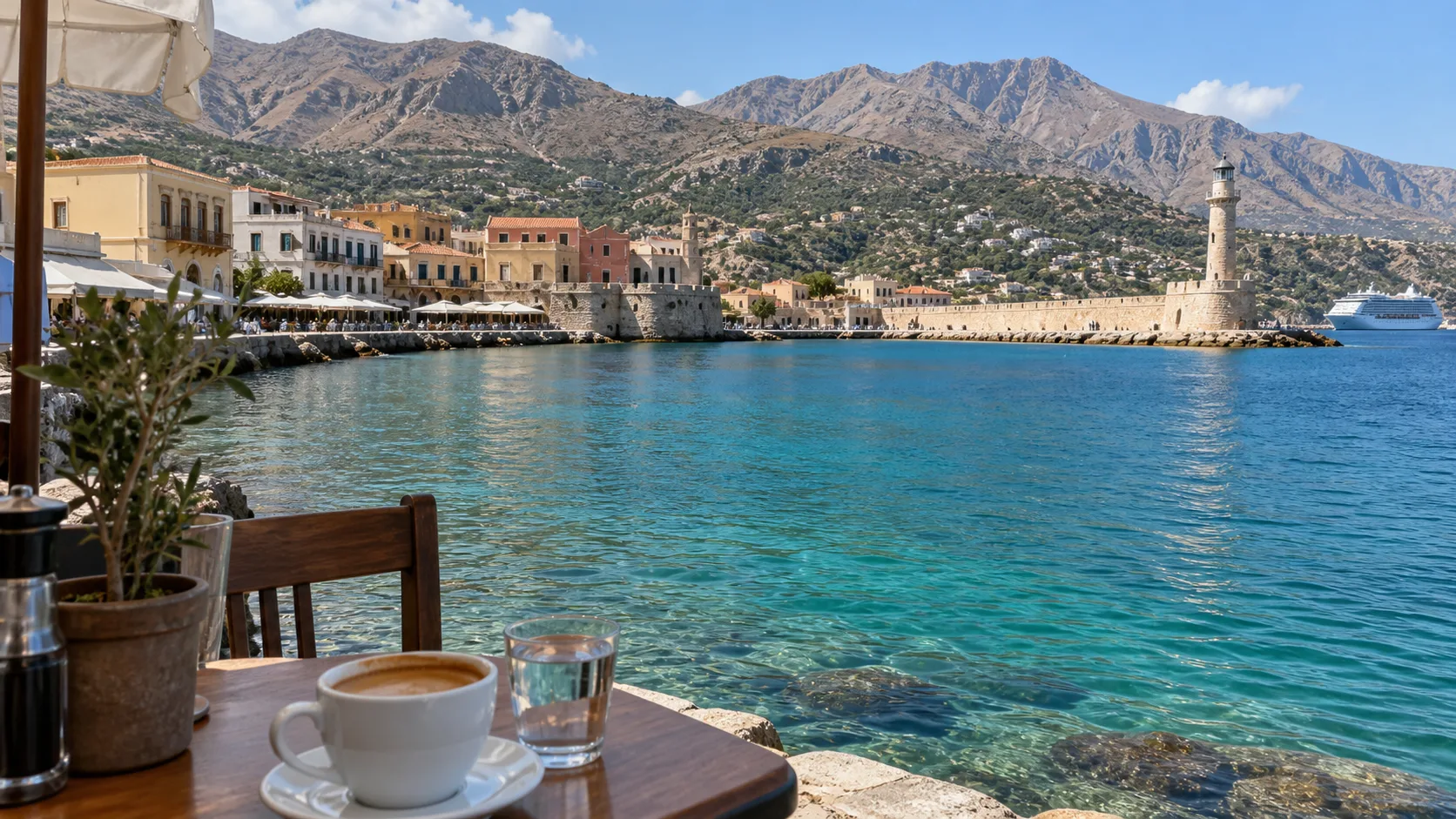
Crete-focused route
Crete is large enough that Heraklion, Chania-area calls, and smaller ports lead to entirely different days. Heraklion is the usual choice for Knossos and the archaeological museum, while a western call is better for Chania’s Venetian harbor and regional drives.
A short call barely scratches the island. If Crete is the main attraction, prioritize an itinerary with a long day, an overnight, or a pre-cruise stay rather than pretending one palace and one pastry constitute a complete survey.
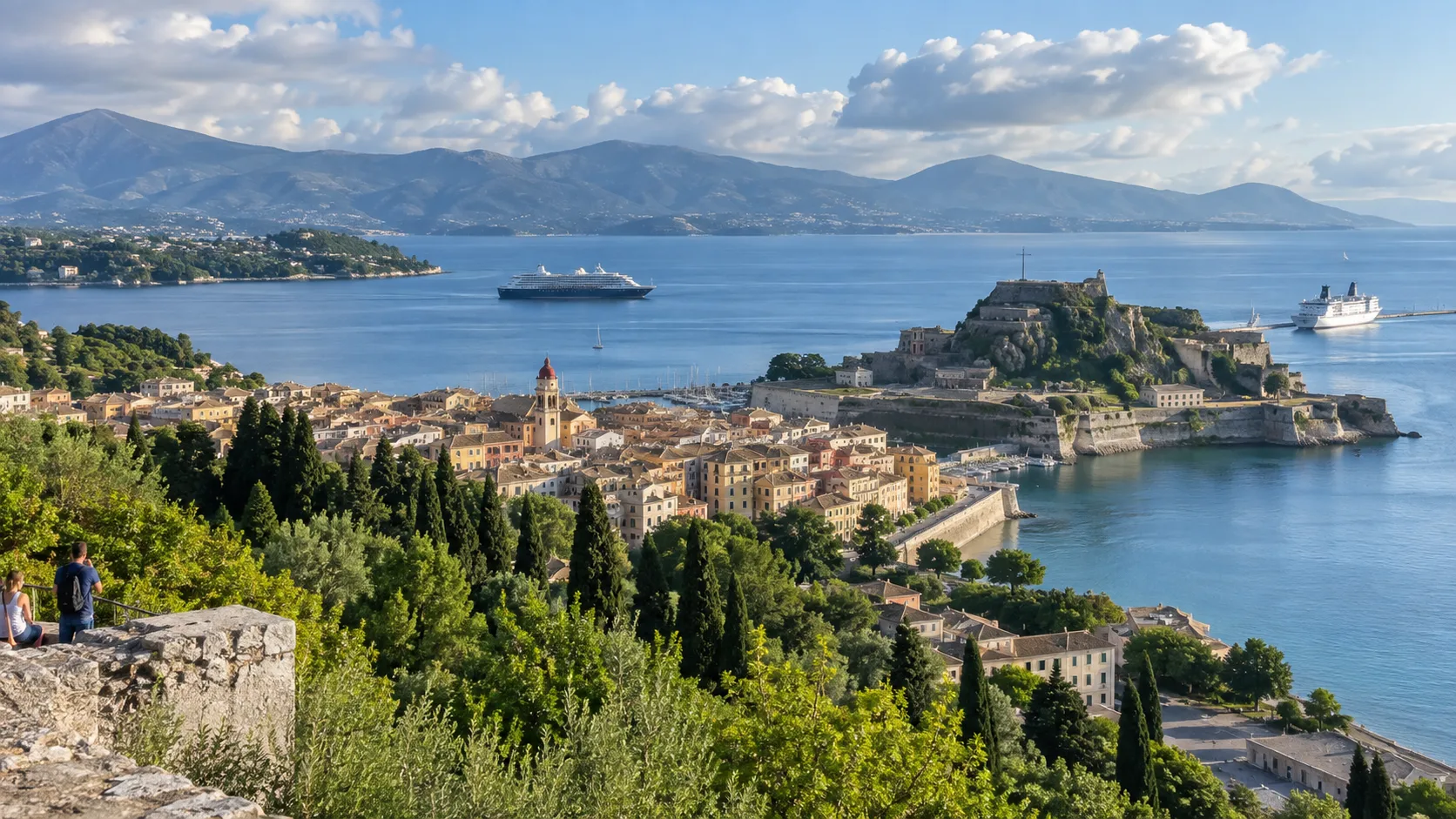
Ionian and Adriatic route
Corfu often appears with Dubrovnik, Kotor, Bari, or Venice-region homeports rather than with a tight Cyclades loop. Its greener landscape, Venetian architecture, and dock-based cruise operation feel different from the dry central Aegean.
This route suits travelers who want country variety and fewer famous-island bottlenecks. It also spends more time outside Greece, so count actual Greek calls before booking.
Pick the right homeport
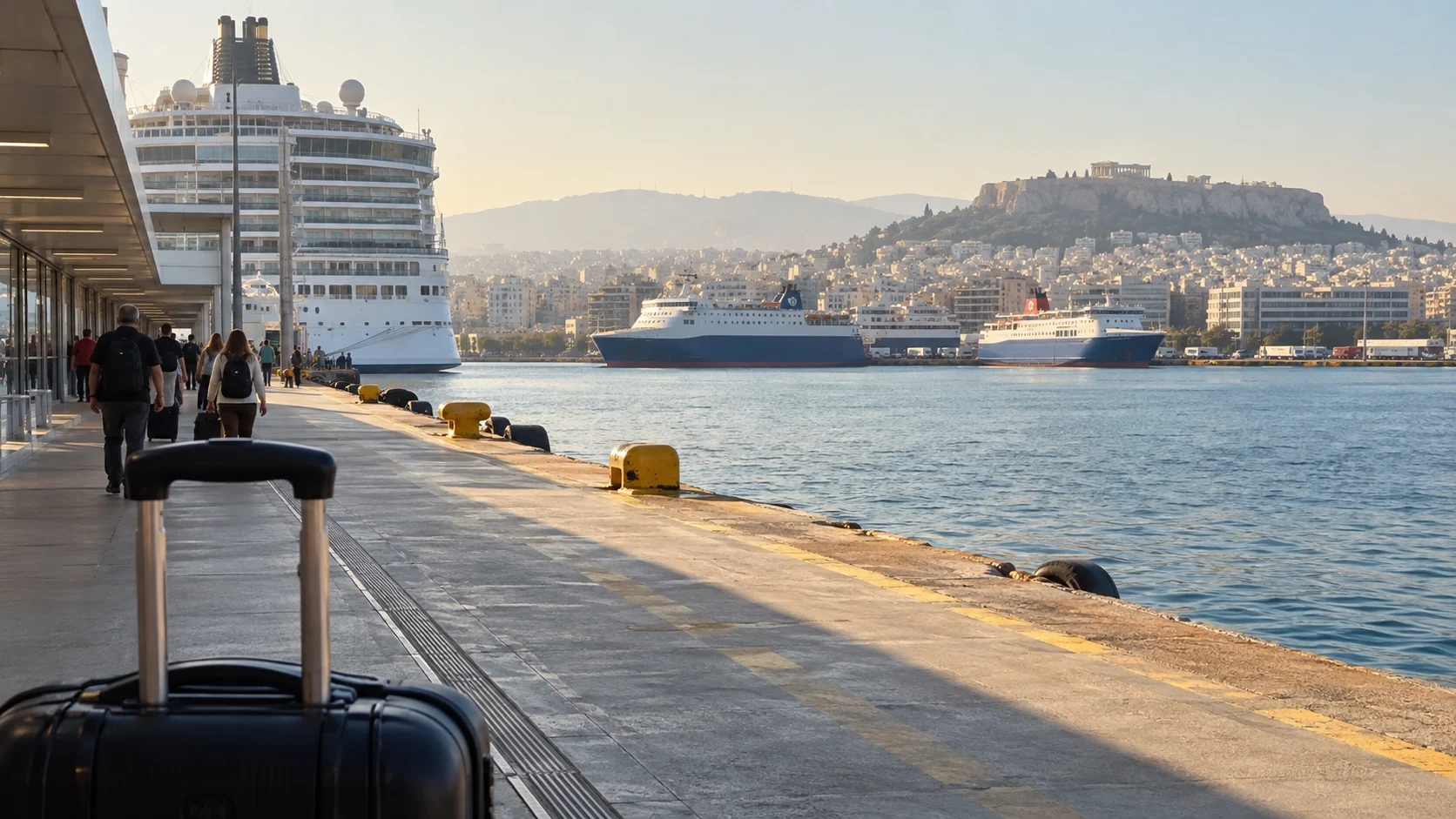
Piraeus for Athens
Piraeus offers the broadest selection of Greek-focused round trips and one-way cruises. It is a separate city and port from central Athens, so “Athens departure” does not mean the Acropolis is waiting outside the terminal doors.
The Piraeus Port Authority lists 11 cruise berths and three passenger terminals, plus internal shuttle transport between ships and terminal areas. Confirm the assigned terminal because distances inside this working port are substantial.
Arrive in Athens at least one night early, preferably two if major sightseeing matters. That buffer protects against flight disruption and gives the city more than a jet-lagged sprint between ancient stones.
Rome, Venice region, and Ravenna
Italy-based cruises often combine Greek islands with sea days and Adriatic ports. Check whether the advertised city is actually the port, since Civitavecchia serves Rome and Ravenna or Trieste may replace the historic Venice cruise departure passengers imagine.
These routes make sense for a two-country vacation but usually devote fewer calls to Greece. They can also add a long airport-to-port transfer at each end.
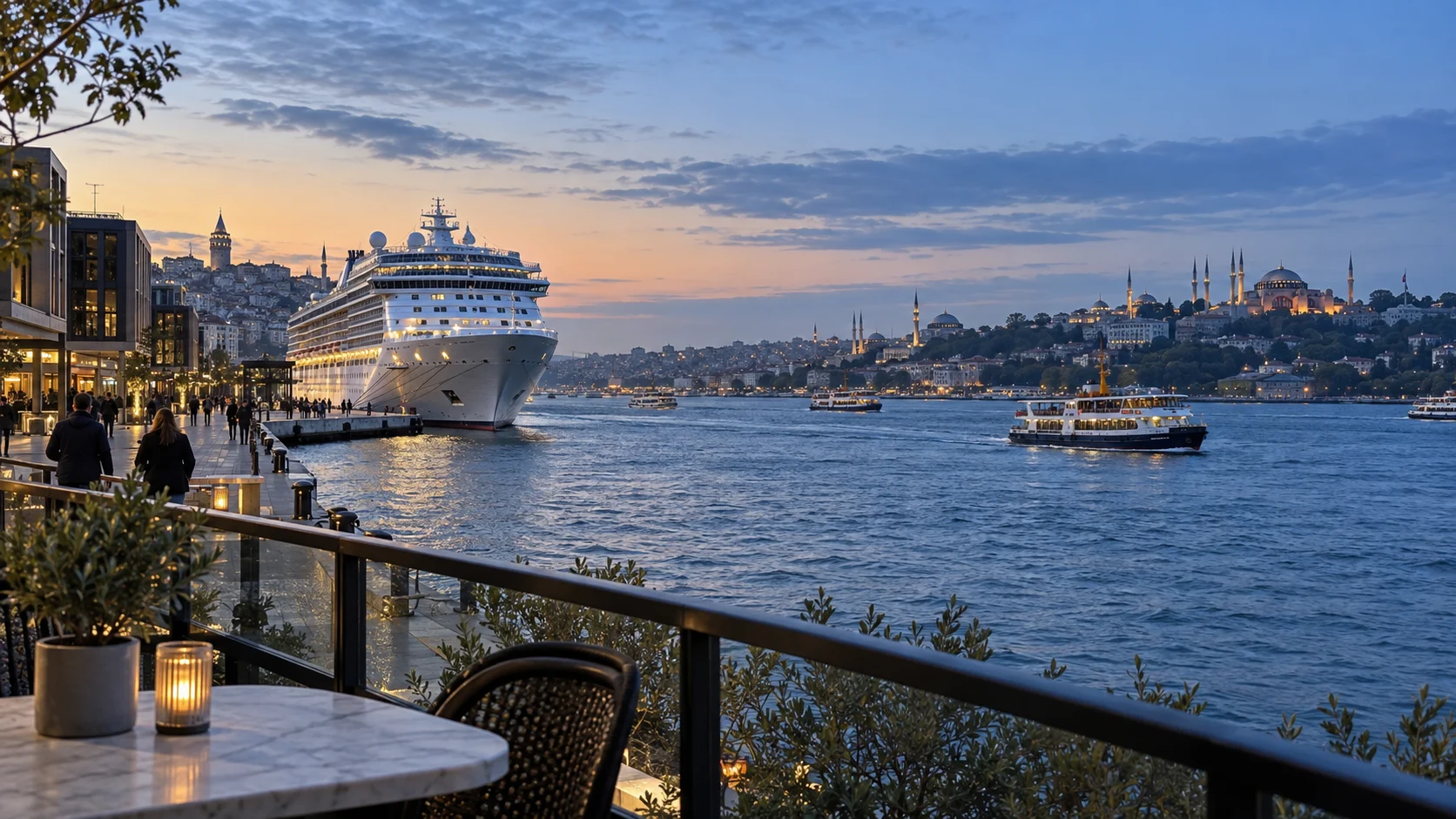
Istanbul
Istanbul homeports create efficient routes to Mykonos, Santorini, Rhodes, and the Turkish coast. They are excellent for travelers who want a substantial Turkey component and are comfortable managing separate entry requirements.
Schedule at least a pre-cruise night and verify the exact Istanbul cruise terminal, airport, and transfer time. A map that labels everything “Istanbul” is being technically correct and practically unhelpful.
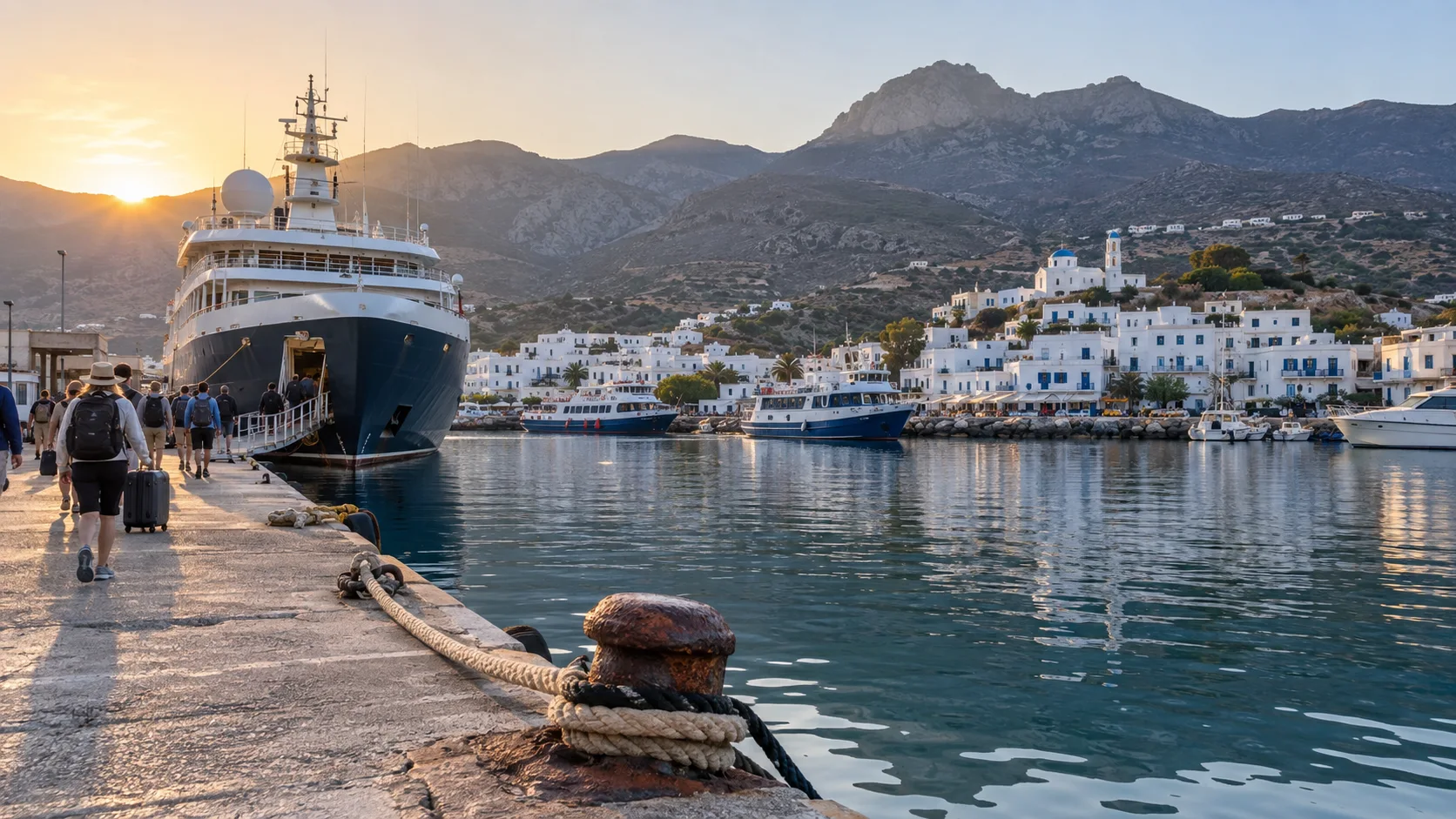
Smaller regional homeports
Thessaloniki, Heraklion, Corfu, and other regional ports sometimes support cruises, especially on smaller or locally focused ships. These departures may reduce backtracking but offer fewer flights and less protection if an inbound connection fails.
Price the complete trip, including air, hotel, luggage, and ground transfers. A lower cruise fare can disappear quickly once an awkward open-jaw itinerary meets summer airfare.
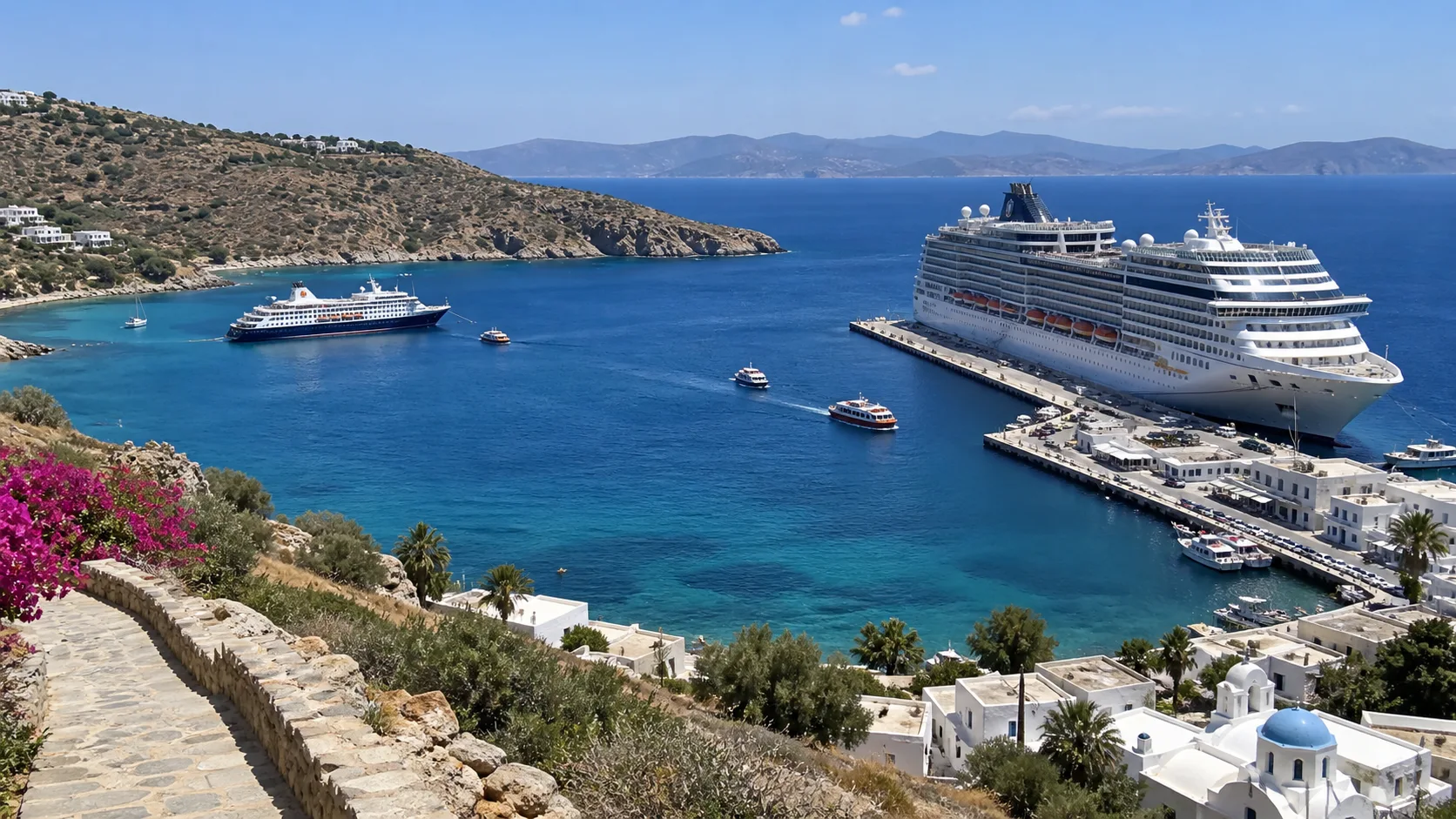
Large ship or small ship?
A large mainstream ship offers more restaurants, entertainment, children’s programming, and cabin categories. It may also carry thousands of guests into small ports, require more tender waves, and spend longer processing everyone ashore.
Small ships can reach less-used islands and may offer longer evenings or swimming stops. The tradeoffs can include higher fares, fewer big-ship amenities, more motion, and cabins that favor clever storage over ballroom ambitions.
Do not assume “small” automatically means intimate access or “large” automatically means poor routing. Compare passenger capacity, scheduled port hours, overnight calls, tender notes, and the number of other ships expected, then decide what matters to you.
Three ship choices that lead to different vacations
I checked these examples September 5, 2026, to make the large-versus-small choice concrete. Each describes a representative published program, so compare the exact departure’s port order, hours, and ship before booking.
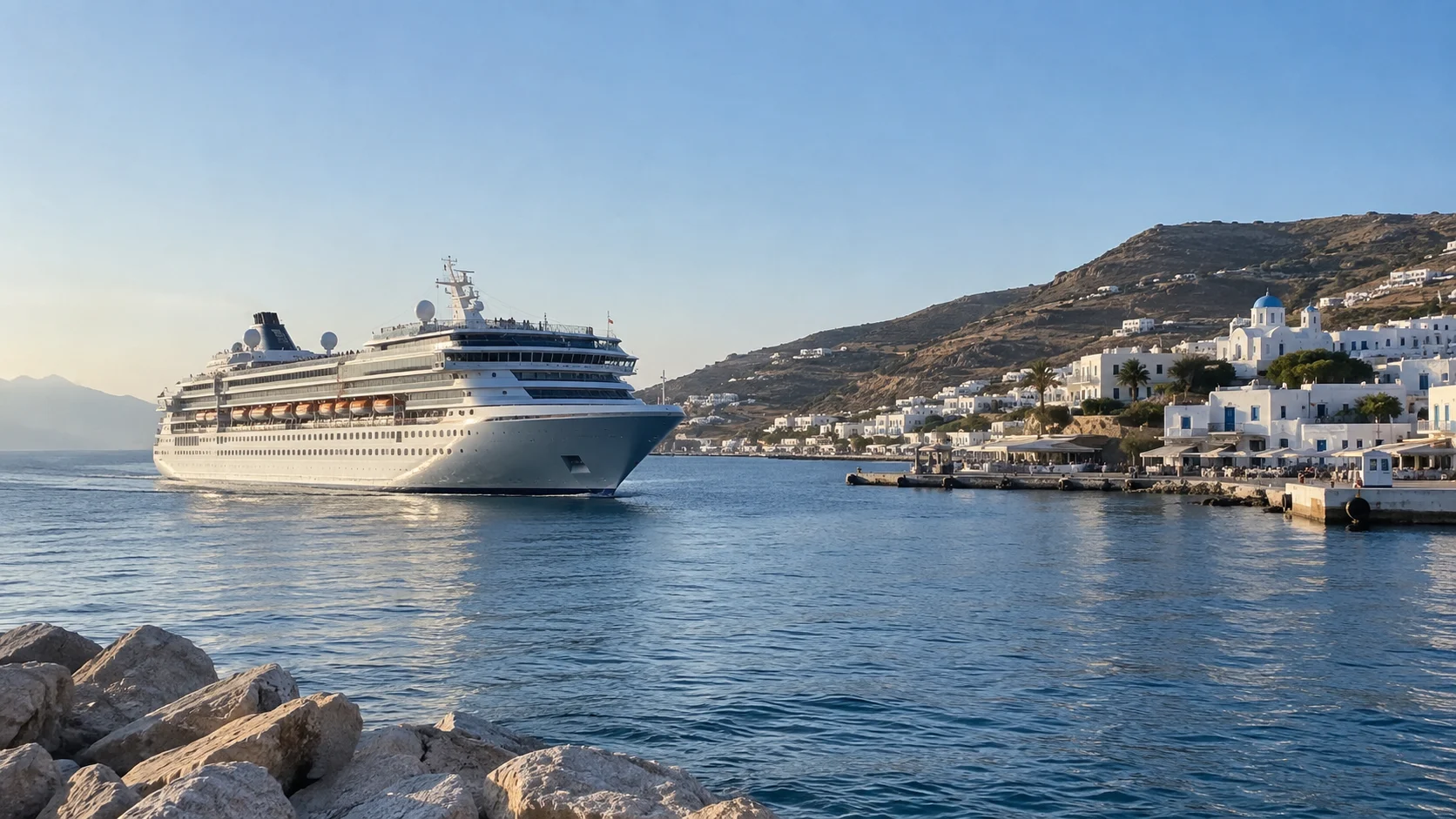
My first-visit default: Celestyal Journey
I would start with Celestyal Journey’s seven-night Idyllic Greece when the islands and their history matter more than resort attractions onboard. Its 2026 pattern links Piraeus, Kusadasi for Ephesus, Rhodes, Agios Nikolaos on Crete, Santorini, Mykonos, Milos, and Piraeus.
The practical advantage is spending full days around the islands, with a late Mykonos departure rather than losing several days crossing from Italy. The operator’s published 2025–2026 brochure describes full port days and late stays, but I would use the final timed itinerary to decide whether dinner ashore fits.
This is a busy sightseeing week, and the ship is not the choice I would make for giant water slides or a new resort complex at sea. I would keep Milos or central Agios Nikolaos as the easier day instead of buying an ambitious excursion in every port.
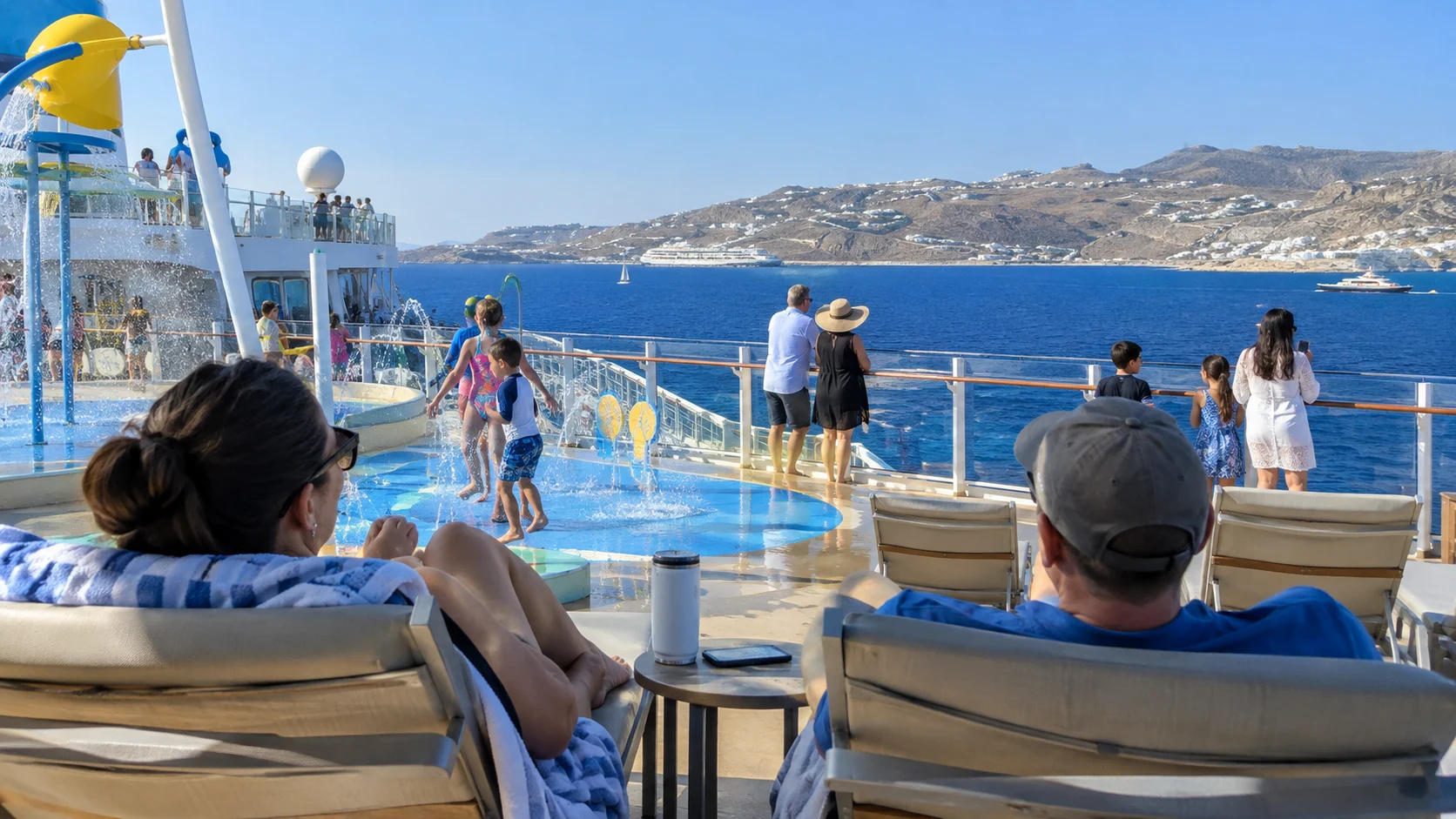
For families who want the ship too: Odyssey of the Seas
Royal Caribbean’s seven-night Greek Isles & Italy example on Odyssey of the Seas runs Civitavecchia, Messina, a sea day, Santorini, Mykonos, another sea day, Naples, and Civitavecchia. Its pools, SeaPlex activities, and entertainment make sense when different generations need different ways to spend the day.
The two sea days provide time to use those facilities, but this route has only two Greek island calls. I would pick it for a combined Italy-and-Greece family vacation and skip it when the main goal was six distinct island days.
Compare the actual hours in Santorini and Mykonos before paying for a balcony or activity package. A long port window helps, but tender queues and the time needed to move thousands of guests still reduce the hours you can use ashore.
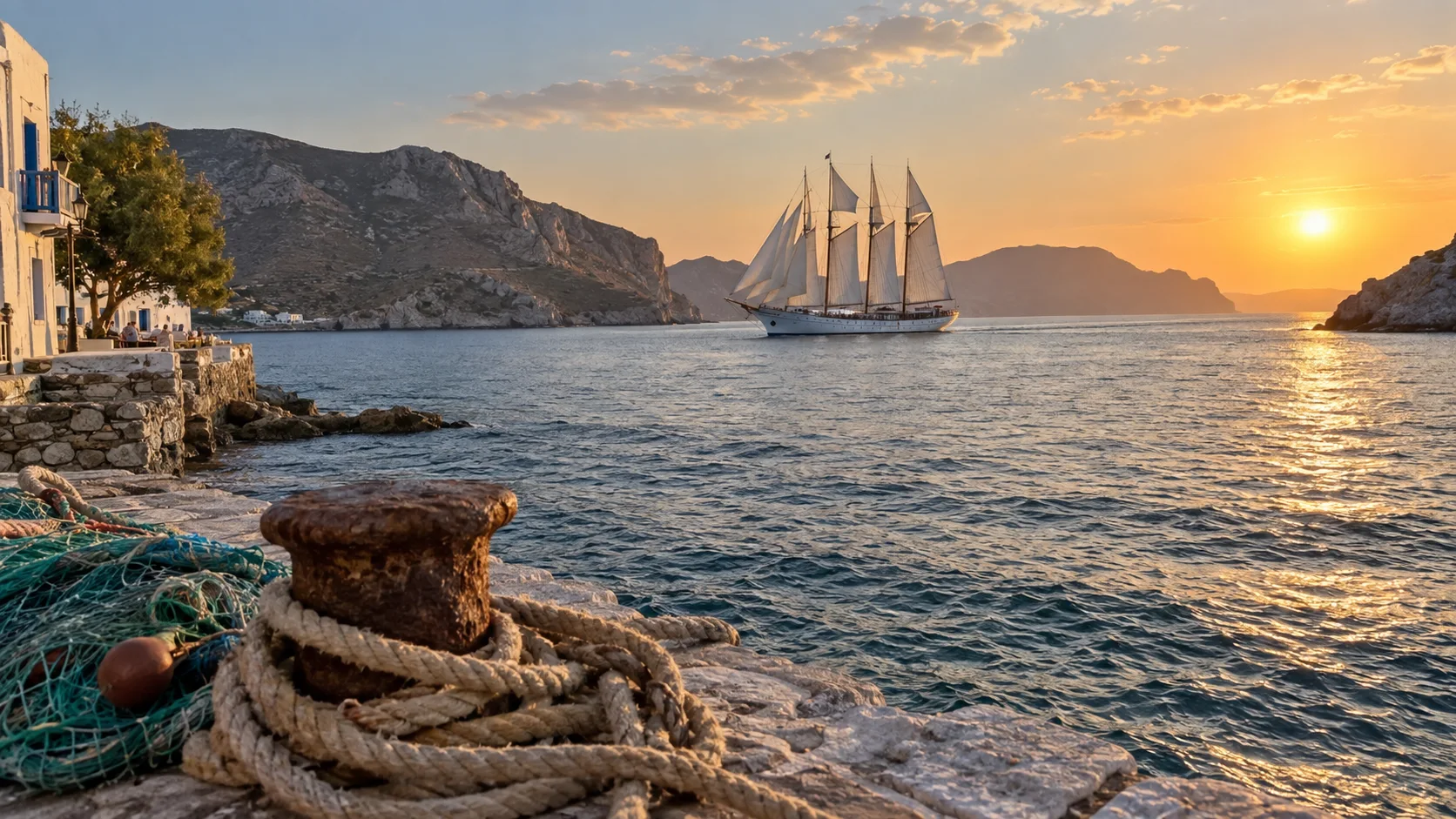
My quieter alternative: Star Flyer
Star Flyer’s seven-night Eternal Cyclades sailing, September 25 to October 2, 2027, follows Piraeus, Milos/Adamas, Chania, Santorini, Bodrum, Amorgos, Hydra, and Piraeus. At a published capacity of 166 passengers, it offers a very different scale from a large family ship.
I would choose it for the sailing atmosphere and the chance to include Amorgos and Hydra instead of building the whole trip around the busiest two islands. Smaller passenger numbers can make getting ashore simpler, but this published route does not give me a basis to promise a particular dinner ashore or overnight, so I would request its timed schedule.
The meaningful drawbacks are compact cabins, stairs, motion, and fewer family attractions. I would also check the specific bed arrangement because the cheapest Category 6 has upper/lower berths, which is a different proposition from a conventional hotel-style double bed.
My default remains Celestyal Journey for a first trip centered on Greek sightseeing, with Star Flyer as the quieter alternative for people who actively like sailing ships. Odyssey wins when the family would enjoy the two sea days as much as the islands, and I would let that preference decide before comparing promotional fares.
Port time is more important than port count
A six-hour call at Santorini is not equivalent to a ten-hour call at Rhodes. Arrival time, departure time, tender operation, attraction hours, sunset timing, and the ship’s excursion priority all determine usable time ashore.
Late calls can be wonderful in Mykonos when shops and restaurants remain active, but they may reduce beach or archaeological-site time. Early calls help with heat and crowds, although breakfast and the alarm clock will need to negotiate.
Look for at least one less-demanding day in a seven-night route. Five consecutive ports can sound efficient until day four, when another 7 a.m. meeting point inspires feelings not found in the brochure.
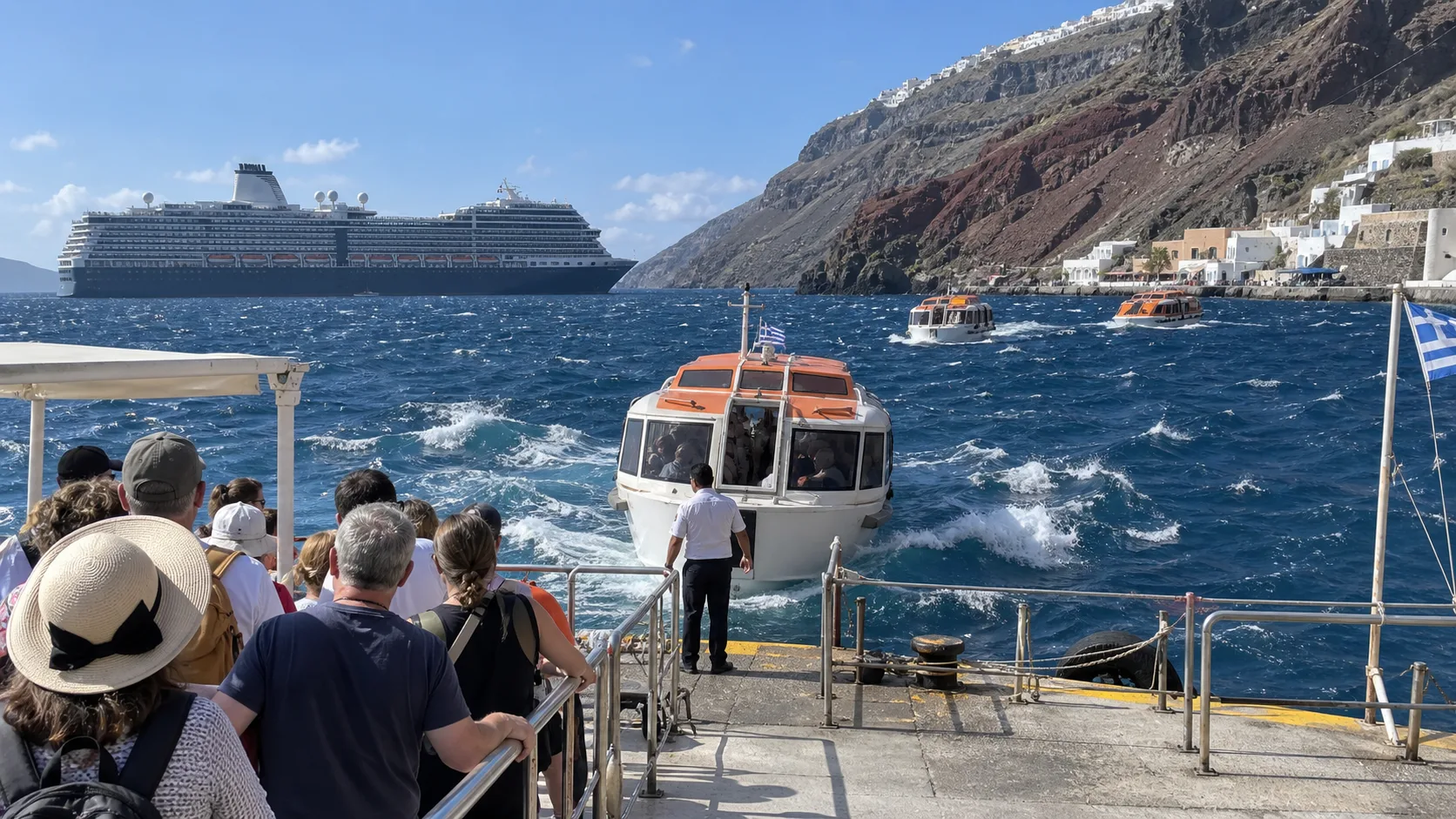
Understand tender risk before booking
A tender port requires passengers to transfer between ship and shore in smaller boats. Wind, swell, port instructions, and the ship’s procedures can delay operations or cancel a call, and guests with limited mobility may face restrictions.
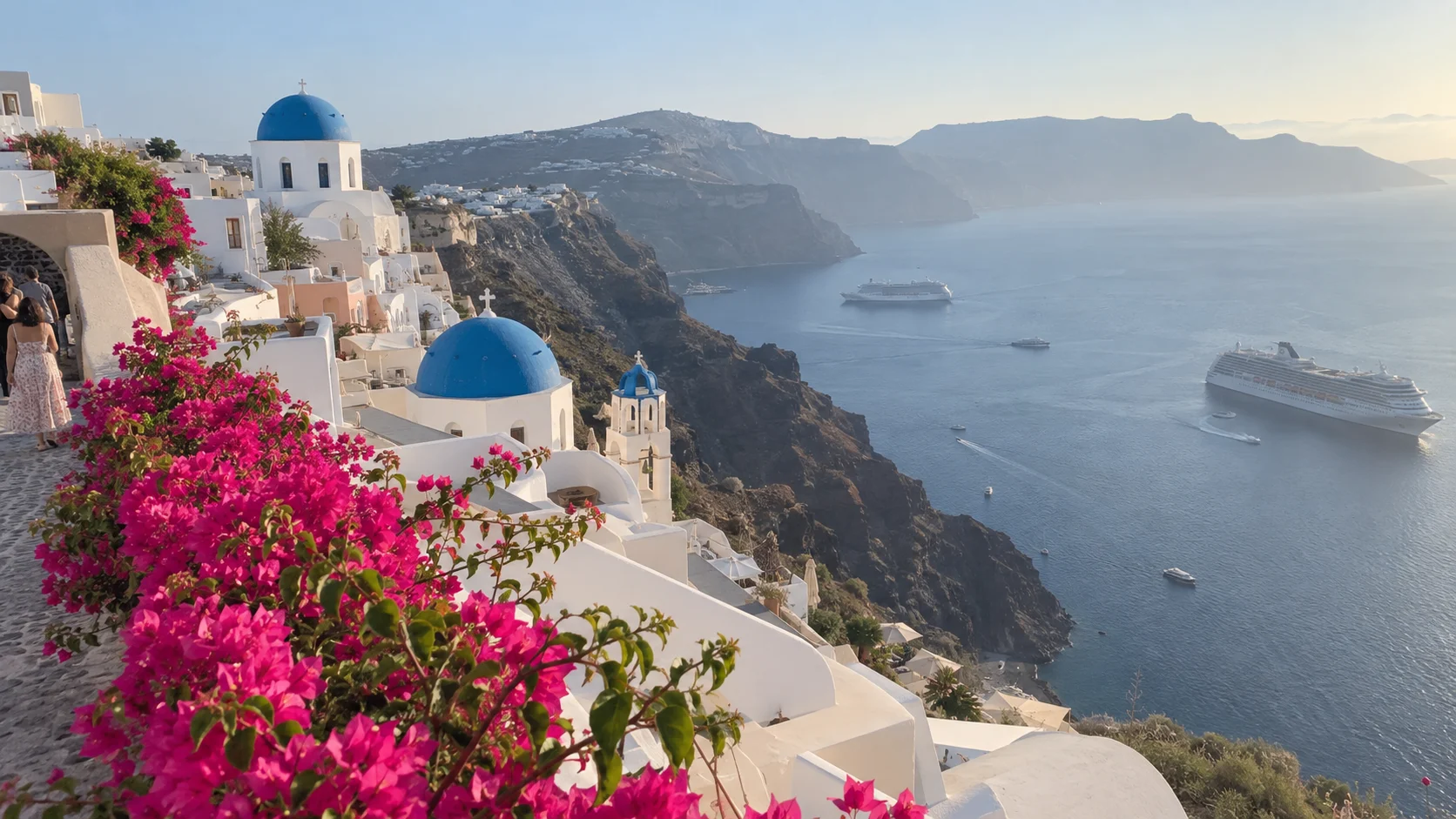
Santorini
Cruise ships anchor in the caldera rather than docking beside Fira. Independent passengers commonly tender to the Old Port below town, while cruise-line excursion arrangements can use different transfer procedures, so follow the ship’s instructions for your day.
The official Santorini Cable Car connects the Old Port and Fira in about three minutes and now offers online ticketing. The ride is short, but the queue can be long when several ships are moving passengers through the same narrow gateway.
Build the return around the tender cutoff, cable-car line, and a generous cushion. A sunset photo is less magical when your ship is becoming a tasteful set of lights on the horizon.
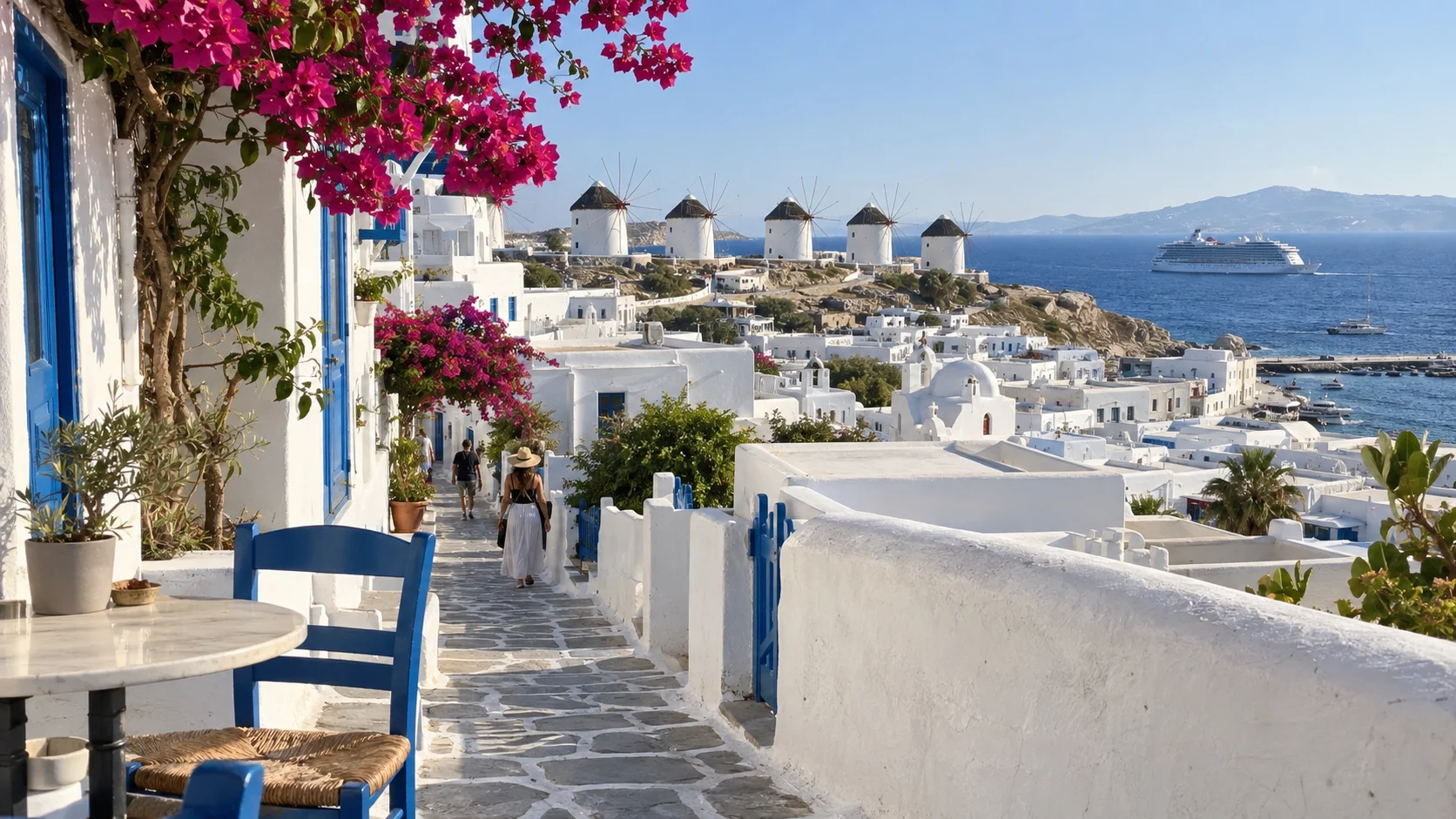
Mykonos
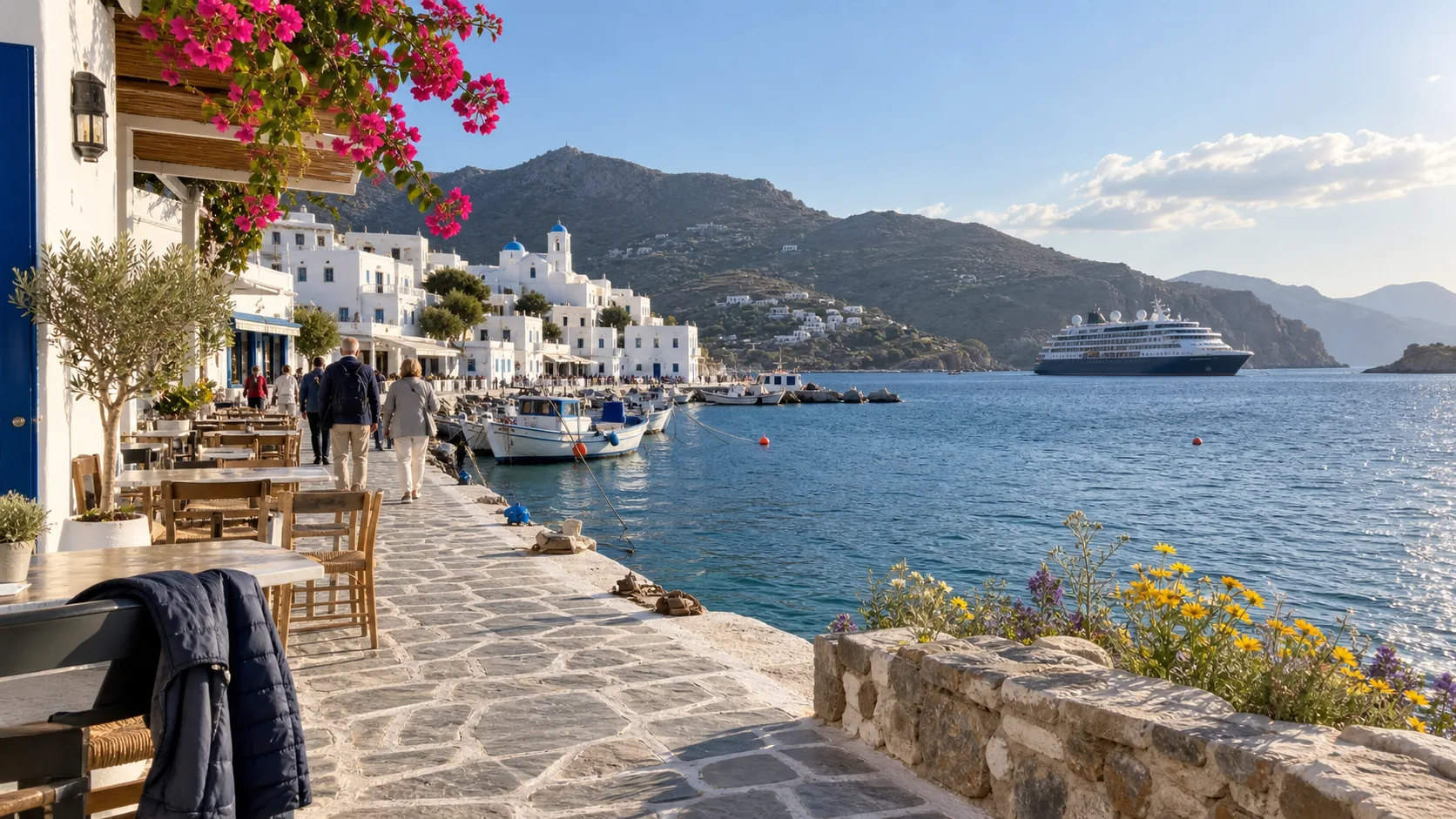
Mykonos can be a dock or tender call, and the arrival point changes the day. A tender may land near Chora, while a ship at Tourlos requires onward transport by an available shuttle, sea bus, taxi, or other service specified for that call.
Do not build an independent tour around one assumed arrival location months ahead. Check the daily program after boarding and tell any operator the ship name, date, and whether the final instructions say dock or tender.
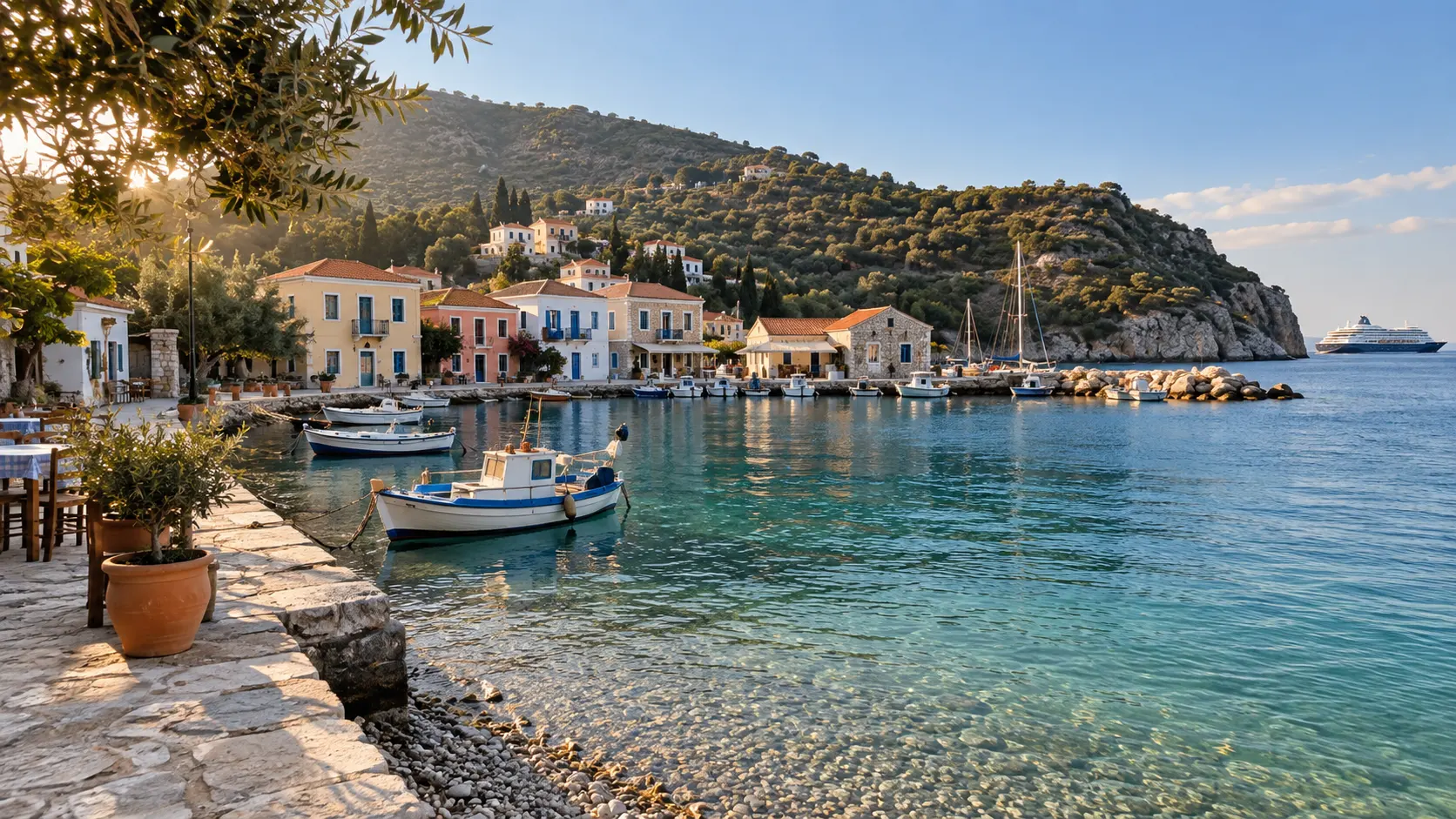
Other islands
Patmos and smaller calls are often tender-based, while Rhodes, Heraklion, and Corfu commonly use berths. Every port can still change because of weather, traffic, vessel size, or port authority decisions.
A tender note is not automatically a reason to reject an itinerary. It is a reason to avoid stacking a tight independent pickup, a distant attraction, and a late return into the same day.
When to cruise the Greek islands
April and early May
Spring usually offers milder sightseeing weather, greener landscapes, and smaller crowds than high summer. Sea temperatures can feel cool, seasonal beach operations may be limited, and wind or rain can still rearrange plans.
Late May and June
This is a strong balance for warm weather, long daylight, and a fuller seasonal schedule before the busiest weeks. Prices and crowds rise as schools finish, and exposed archaeological sites can already feel very hot.
July and August
Peak summer brings dependable beach appeal, busy nightlife, high demand, and intense sun. Heat can make midday ruins uncomfortable, while northerly Aegean winds can affect small boats and tender operations even under blue skies.
Use a reliable marine forecast such as the National Observatory of Athens sailing maps near departure, while treating the captain and port authorities as the operational decision-makers. A sunny phone icon does not describe sea state.
September and October
September often keeps warm water while easing some family-season pressure. October brings softer temperatures and better walking conditions, but shorter daylight, rain risk, wind, and reduced seasonal hours become more relevant.
Shoulder season is ideal for history-first travelers who accept some weather uncertainty. Beach-first travelers should check the operating dates of specific clubs, boats, and transportation rather than assuming an island closes with one ceremonial flip of a switch.
Match the itinerary to your travel style
For first-time Greece visitors
Athens plus Santorini, Mykonos, Rhodes, and Crete offers recognizable variety. It is also an ambitious route, so favor longer calls and a sea day over squeezing in one more flag.
Use this regional overview of Greece’s major landmarks to decide whether ancient sites, medieval towns, beaches, or island villages deserve your limited hours. Priorities chosen at home are cheaper than spontaneous long-distance taxis.
For beaches
Choose late May through September and inspect how far each beach lies from the actual pier or tender landing. A cruise with Mykonos, Crete, and Rhodes can work well, but famous beaches are not necessarily the easiest on a short call.
For history
Choose Athens, Rhodes, Crete, Patmos, and perhaps Kusadasi for Ephesus, with spring or fall dates for more comfortable walking. Check official attraction hours and ticket rules for the exact date because archaeological schedules can change seasonally.
For a quieter experience
Look beyond a route built entirely from Santorini and Mykonos. Smaller ships calling at Syros, Milos, Patmos, or other less-used ports can create more contrast, though “less visited” never guarantees empty streets.
For mobility needs
Prioritize docked calls, accessible excursion vehicles, and explicit tender policies. Cobblestones, steep lanes, heat, gangway slope, tender steps, and limited adapted taxis can matter more than the ship’s onboard accessibility.
Excursion or independent day?
Ship excursions provide coordinated meeting points and protect the return connection under the line’s stated terms. They can cost more, move in large groups, and spend time on loading, shopping, or attractions that are not your priority.
Independent days work beautifully in walkable Rhodes and can suit central Mykonos or Corfu plans when transport is clear. A ship tour becomes more attractive for distant Knossos, Lindos, an uncertain tender arrangement, or any day where one missed connection would dismantle the schedule.
Do not confuse a cruise tender with an inter-island ferry. Adding a ferry day trip introduces a separate operator, port, timetable, weather decision, and return risk, which is rarely sensible during a short cruise call.
Booking and entry checks
Confirm the passport validity, visa, and entry requirements for every country on the itinerary using official government sources. Rules depend on nationality, residence, route, and timing, and the cruise line’s boarding requirements may be stricter than a casual online summary.
As checked on September 4, 2026, the official EU ETIAS FAQ says ETIAS is not yet operating and no applications are being collected. Because launch timing is volatile, recheck the official page shortly before travel and ignore websites selling premature authorizations.
Travel insurance should address medical care, evacuation, delay, cancellation, and missed connection risks appropriate to the policyholder. Read the exclusions and required documentation instead of assuming the word “cruise” turns a policy into a magic shield.
What to pack
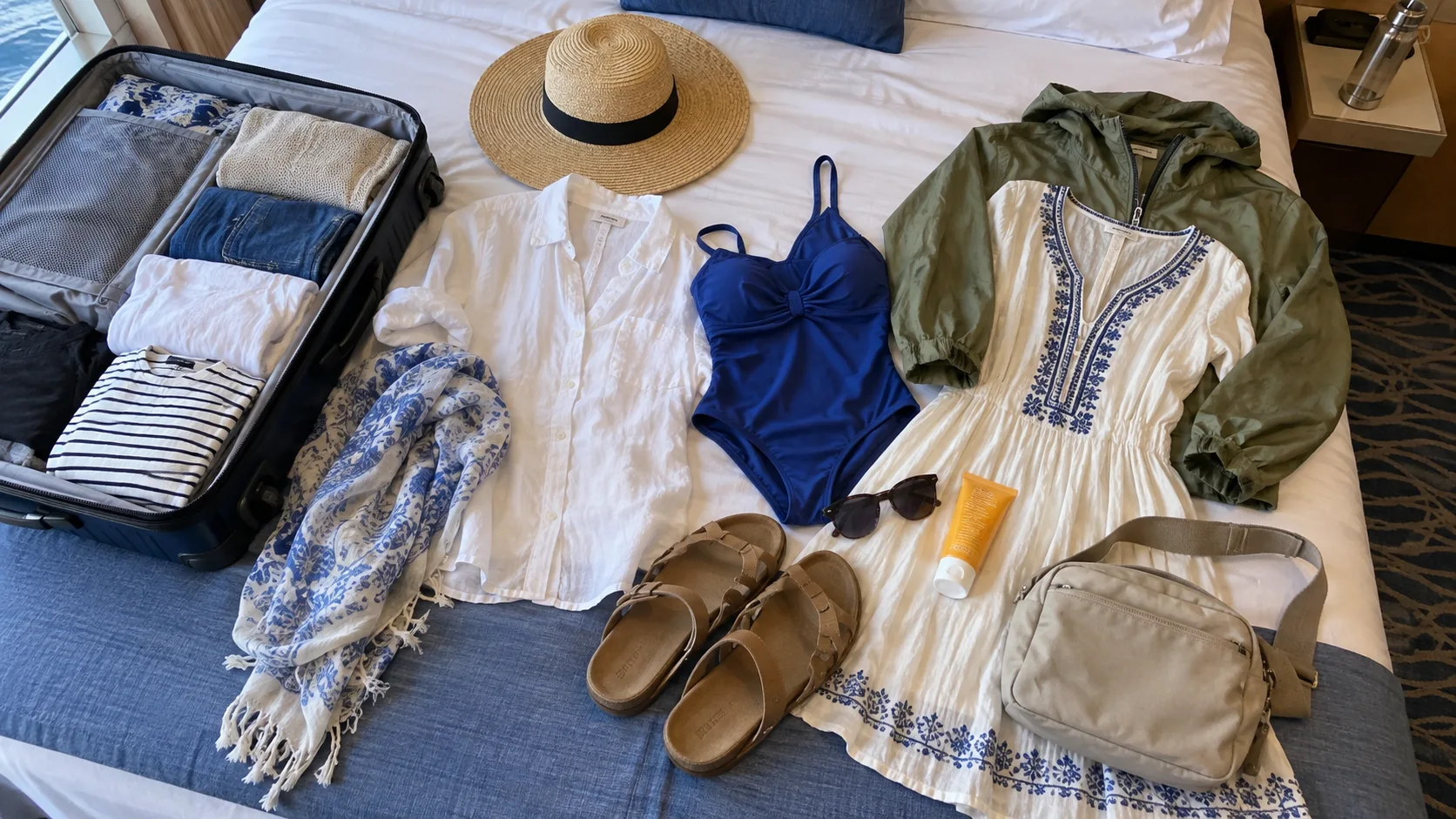
- Supportive shoes with grip for stone, slopes, and gangways
- A hat, sunglasses, reef-conscious sunscreen, and refillable water bottle
- A light layer and compact rain shell for wind or shoulder-season weather
- Modest shoulder and knee coverage for monasteries and churches
- Small euro notes and a backup card for minor purchases or transport
- An offline map, ship contact details, and the all-aboard time
- Any essential medication in original labeled packaging
A day bag should remain small enough for tenders, crowded lanes, and security screening. Leave room for water and restraint around souvenirs shaped like ancient sculpture.
A practical seven-night benchmark
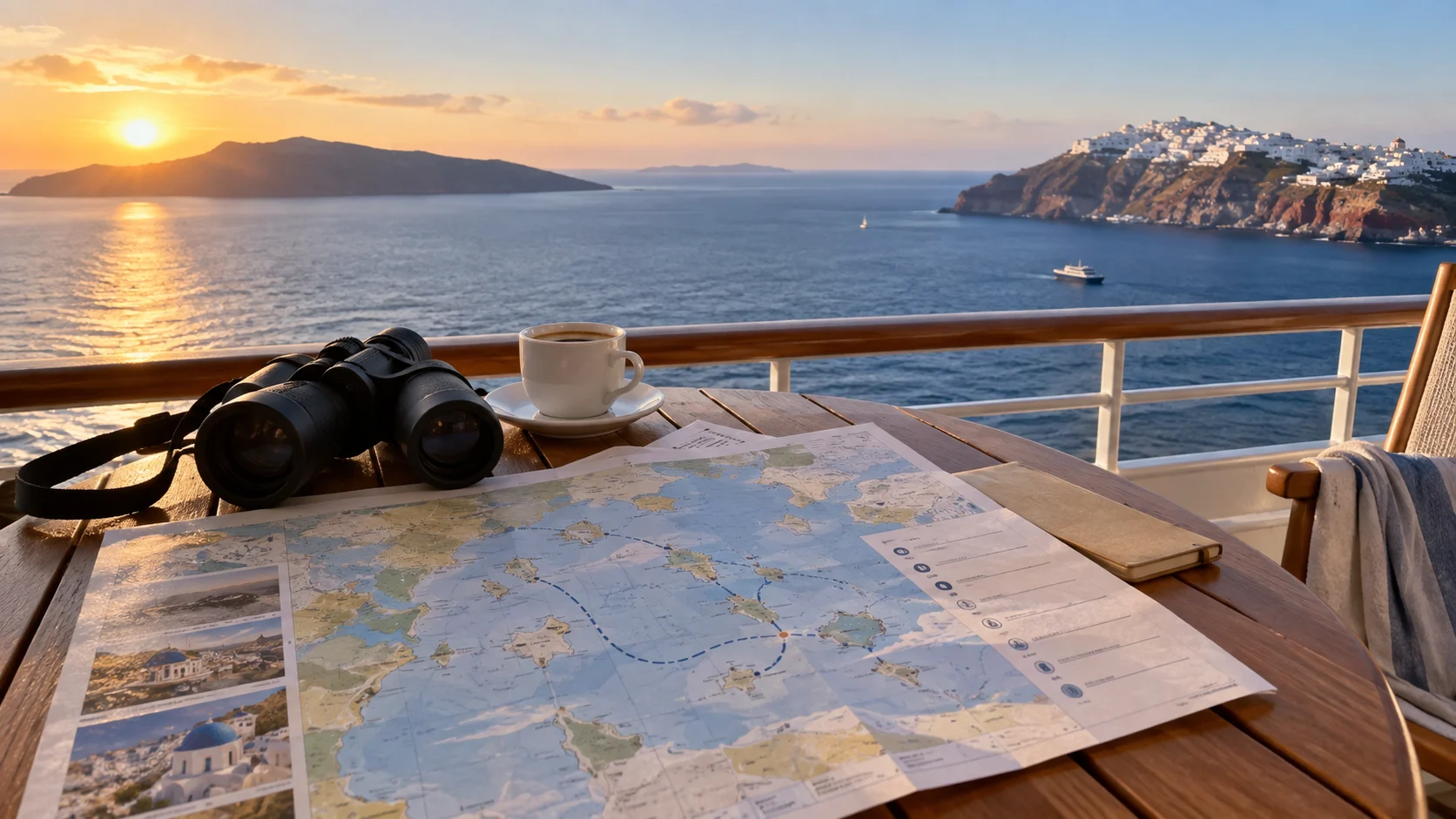
A balanced first itinerary might include Athens, one sea or recovery day, two Cyclades calls, one Crete call, and Rhodes or a Turkish port. The exact names matter less than having enough hours and at least one pause between demanding days.
An Adriatic version might begin in Italy and combine Corfu with Dubrovnik, Kotor, and one or two Aegean calls. Before choosing it, compare the separate logistics in this Dubrovnik cruise port guide and remember that beautiful ports can still require very different planning.
Final decision checklist
- Count Greek calls, not the words in the cruise title.
- Check homeport-to-airport transfer time and arrive early.
- Compare usable port hours, not simply the number of stops.
- Mark every dock, tender, and uncertain arrival.
- Match ship size to the onboard experience and ports you value.
- Choose spring or fall for walking, summer for peak beach conditions.
- Leave a buffer for wind, queues, traffic, and tender cutoff.
- Verify entry rules and attraction schedules close to departure.
The best Greek islands cruise is not necessarily the one that collects the most famous names. Choose a coherent region, realistic port times, and a ship whose scale matches your priorities, then allow Greece enough breathing room to feel like a place rather than a checklist.
If this is your first sailing, pair the itinerary comparison with these first-time cruise planning steps. Good preparation should make the trip feel easier, not require a laminated binder thick enough to qualify as luggage.