How to Plan a Trip: 13 Smart Checks Before You Go
Good travel planning is not about controlling every minute. It is about protecting the expensive, fragile parts of a trip, leaving room for the enjoyable ones, and knowing what you will do when a flight, reservation, stomach, or weather forecast refuses to cooperate.
Start With the Things That Can Stop the Trip
Check entry documents before comparing hotels. For an international trip, confirm passport validity, blank-page requirements, visas or electronic authorizations, transit-country rules, and any special documentation for a child traveling with one parent or another adult.
Do not apply a generic “six-month rule” to every country, because requirements differ. The U.S. State Department’s international travel checklist points travelers to destination-specific entry, exit, passport, visa, and local-law information.
Verify that every ticket matches the traveler’s identification exactly enough for the carrier and border authorities. If a legal name, passport, visa, or airline record needs correction, early is the cheapest time to discover it.
Domestic flyers should also check acceptable identification rather than assuming an old license will work. TSA began REAL ID enforcement on May 7, 2025, and its current identification page lists acceptable alternatives, including a U.S. passport.
Build the Trip Around Priorities, Not Internet Checklists
Choose three priorities for the trip and let them control the budget. If food, beach time, and a central hotel matter most, it is perfectly sensible to skip the rental car, famous day trip, or upgraded room that does not serve them.
Then identify the hard constraints: arrival time, accessibility, medication storage, children’s schedules, work calls, dietary needs, and the last transportation home. A beautiful itinerary that ignores a real constraint is not ambitious, just brittle.
Give each day one anchor rather than five mandatory stops. A timed museum ticket, dinner reservation, or train journey can define the day while nearby options remain flexible.
Map travel time honestly. Forty miles can take an hour on an empty highway, several hours on an island road, or most of a day when ferries and border crossings are involved.

Compare the Complete Booking Cost
Airfare should be compared with baggage, seat selection, airport transport, and schedule risk included. A cheaper connection can be poor value if it requires an airport hotel, adds a bag fee, or makes a separate cruise or tour departure precarious.
For hotels, check taxes, resort or destination fees, parking, breakfast, deposits, and cancellation terms. A suburban room may save $40 nightly but cost more after parking and daily transportation, especially when everyone in the group travels together.
Book directly when clear communication and easy changes matter, but compare reputable package pricing when it genuinely bundles costs you need. Whatever channel you choose, save the confirmation, rate terms, included benefits, and cancellation deadline as a PDF or screenshot.
Track refundable reservations after booking. You may be able to rebook if the price drops, but never cancel the original until the replacement is confirmed and its terms are acceptable.
If price is the main constraint, use a trip budget rather than hunting isolated bargains. Our budget travel strategies focus on the costs that meaningfully change the total.
Protect Your Arrival Day
Do not schedule a nonrefundable tour, wedding, cruise departure, or long-distance train too close to a flight arrival. Separate tickets deserve an even larger buffer because the second carrier may owe nothing when the first journey runs late.
Arrive a day early for a high-stakes departure when time and budget allow. That hotel night is not glamorous, but it buys a recovery window for weather, crew, maintenance, baggage, and missed-connection problems.
Keep the first evening simple after a long flight. A nearby meal, short walk, and early night usually serve the rest of the trip better than an expensive event attended while exhausted.
Pack for the Itinerary You Booked
Start with weather, activities, local expectations, and laundry access, then build a compact wardrobe around repeatable layers. Packing one item for each imagined scenario is how a manageable bag becomes a mobile storage unit.
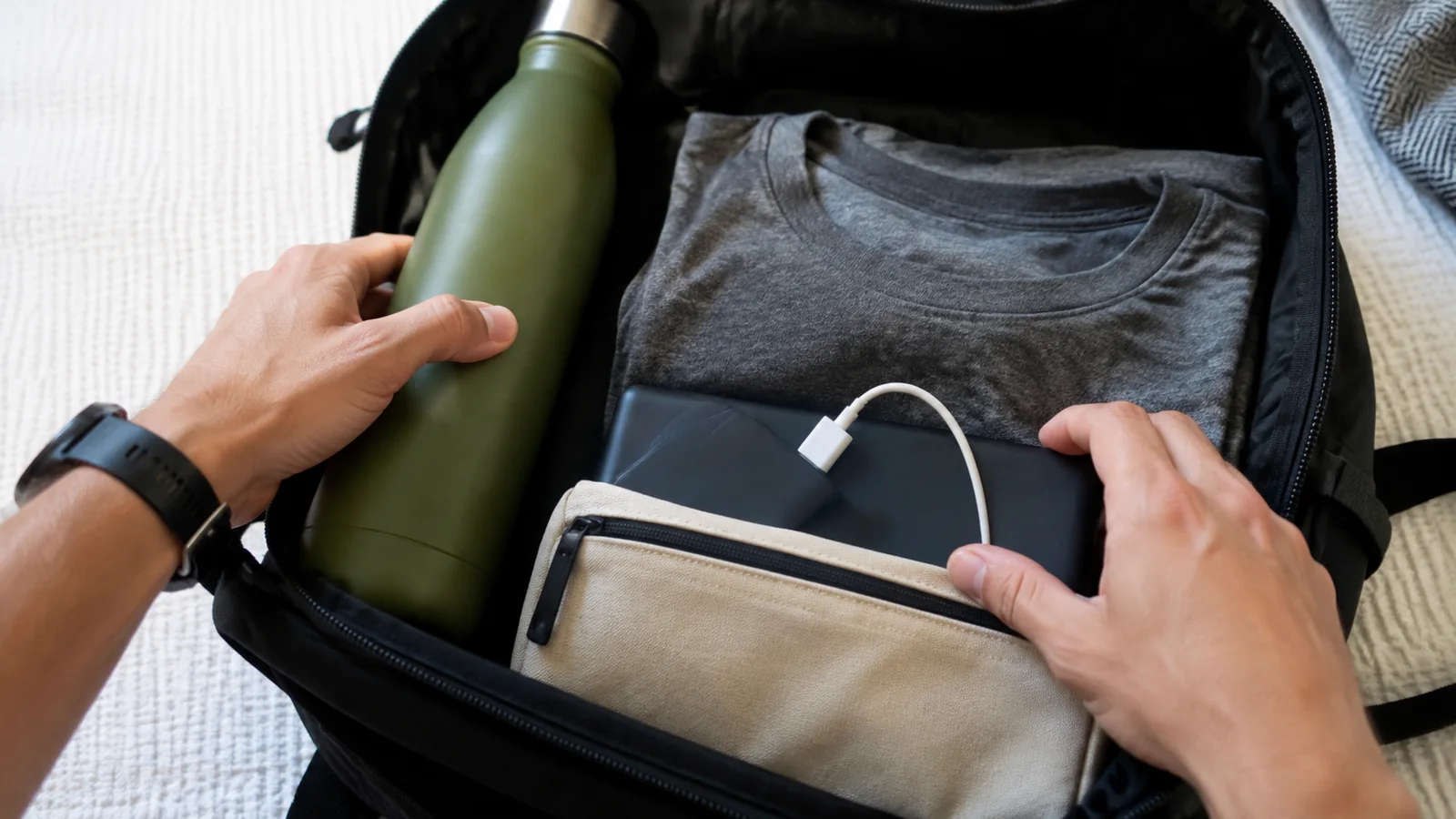
Wear or carry the items that would be difficult to replace during a delay. Identification, medication, keys, glasses, electronics, chargers, valuables, one basic outfit, and essential child supplies belong in the personal item or carry-on.
Measure and weigh luggage using the operating carrier’s rules, including each airline on a multi-carrier itinerary. A “carry-on” is not one universal size, and a regional aircraft may require a gate check even when the bag meets published limits.
TSA’s familiar 3-1-1 rule still limits ordinary carry-on liquids, gels, aerosols, creams, and pastes to containers of 3.4 ounces or less inside one quart-size bag, with stated exceptions. Check the agency’s liquids guidance for medical, infant, and other special cases instead of improvising at the checkpoint.
Use a short final checklist for the items that cannot be packed until departure morning. Phone, wallet, medication, passport, glasses, charging cable, and house keys are more important than a seventh shirt.
Make Important Information Available Offline
Download boarding passes, hotel addresses, insurance details, transit maps, tickets, and the first day’s directions. A dead zone, broken app, foreign-data setting, or lost phone should be an inconvenience rather than a complete shutdown.
Keep an encrypted or otherwise securely protected digital copy of key documents, and leave appropriate itinerary details with a trusted contact. A paper copy of the passport identification page can help with reporting a loss, but it does not replace the passport.
Save the phone numbers for the airline, insurer, card issuers, accommodation, and emergency contacts outside the contacts app. Also write down the international dialing format if the trip crosses borders.
Handle Money in Layers
Carry at least two payment methods stored separately, plus enough local cash for an immediate ride, meal, or small emergency. A single lost wallet, frozen card, or offline terminal should not strand the whole party.
Check foreign transaction fees, ATM charges, daily limits, and the card issuer’s travel and fraud procedures. When a terminal offers to convert the price into U.S. dollars, compare that rate and markup with paying in local currency rather than choosing reflexively.
Use a simple daily spending target for flexible costs, but keep lodging and transportation separate. This prevents one expensive train ticket from making every meal look like a budget failure.
Never rely on a credit limit as the emergency plan. Keep a small reserve for a hotel during a cancellation, replacement transportation, medical care, or a deposit hold.

Plan Health Needs Before Departure
Review destination health information early enough to act on it. CDC advises travelers to check its destination pages for current notices, vaccines, medicines, and non-vaccine risks, and to discuss individual needs with a qualified clinician.
Carry prescription medication in accordance with destination and transit laws, with adequate supply and appropriate documentation. A medicine that is routine at home can be controlled, restricted, or unavailable elsewhere.
Know how your health coverage works away from home and abroad. Travel insurance can help with covered emergencies, but exclusions, preexisting-condition rules, evacuation terms, reimbursement procedures, and coverage limits matter more than the product name.
Hydration, sleep, sun protection, food safety, and realistic pacing prevent many miserable travel days. Leave enough margin to stop when someone is overheated, unwell, or simply finished.
Use Situational Awareness Without Letting Fear Run the Trip
Check current official advisories and local alerts close to departure, not only when the trip is booked. U.S. citizens can also enroll in the State Department’s free Smart Traveler Enrollment Program for embassy or consulate messages and emergency contact support.
Avoid displaying all your cash, documents, and cards together. In crowded areas, use a securely closed bag, pay attention during staged distractions, and step into a business before opening a map or reorganizing valuables.
Choose licensed or officially recognized transportation where local guidance recommends it. Verify the vehicle, driver, and destination before getting in, then share trip status when that feature is available.
Trust a specific concern, not a vague obligation to be polite. You can leave a ride, tour, bar, rental, or interaction that feels wrong without first proving that danger exists.
Travel Better With Other People
Discuss budgets, wake-up times, meal styles, walking tolerance, and must-do activities before booking. Many “travel compatibility” problems are really unspoken expectations appearing at the most expensive possible moment.
Agree that people can split up. One traveler resting while another visits a museum is often healthier than forcing everyone through an activity together and resenting it.
For shared expenses, decide whether you will split equally, track individual purchases, or alternate payments. Record large costs as they happen rather than reconstructing them at the airport.
Families and groups should establish a meeting point in case phones fail. Children should know the accommodation name and how to identify an appropriate uniformed employee or staffed desk.

Know What to Do During a Flight Disruption
When a flight is canceled, use the airline app while joining the service line and checking reasonable alternatives. Be ready to propose an exact flight number or routing, but do not buy a costly replacement until you understand what the original airline will provide.
For flights covered by U.S. rules, the Department of Transportation says passengers are entitled to a refund when an airline cancels or significantly changes a flight and the passenger chooses not to travel or accept the alternative. The agency’s refund guidance explains qualifying changes and ancillary-service refunds.
Meals, hotels, ground transportation, and rebooking commitments can differ by airline and cause. Save receipts, screenshots, delay notices, baggage reports, and the name or case number attached to each conversation.
If a checked bag does not arrive, report it before leaving the airport and get a claim reference. Ask what essential purchases may be reimbursable and keep receipts rather than assuming every replacement will be covered.
Use the Same Logic for Road Trips and Cruises
A road trip needs vehicle checks, rest stops, fuel planning, offline navigation, and a driver who is actually rested. Our road trip planning tips turn those basics into a realistic driving day.
A cruise adds firm boarding cutoffs, document rules, port transfers, and a moving hotel. The most useful cruise travel tips begin with arriving safely and understanding the fare, not with decorative cabin gadgets.
Before any longer vacation, handle the unexciting home tasks that prevent an anxious return. This pre-vacation home checklist covers food, trash, laundry, security, and the first hour back.
A Simple Final Check
- Documents are valid for the exact destination and transit route.
- Names match reservations, and confirmations are saved offline.
- The full trip cost includes fees, local transportation, and a reserve.
- Critical medicine and essentials are in the carry-on.
- Someone trusted has the itinerary and emergency contact details.
- Arrival buffers protect the trip’s most time-sensitive event.
- Everyone understands the pace, budget, and permission to split up.
The best travel habit is simple: protect what would be hard to replace, verify what would be costly to misunderstand, and stay flexible about the rest. That approach will not prevent every delay or mistake, but it makes both far easier to solve.