
Waterfall quotes are easy to share and surprisingly easy to misattribute. This guide gives you original caption ideas, a reliable way to check famous lines, and practical wording for photos without putting invented words under someone else's name.


Use This Guide Without Spreading a Fake Quote
Everything labeled “original caption” below was written for this page and is not attributed to a public figure. You may adapt those lines to match your photograph, mood, and platform.
A famous quotation needs a different process. The exact wording, author, original work, and publication context should be verified before the name goes on an image.
The Library of Congress quotation guide treats online quote collections as starting points rather than final proof. Repetition across hundreds of websites does not establish that the person actually wrote or said a line.
Short Original Waterfall Captions
Original caption: Follow the sound until the forest opens.
Original caption: A wild river taking the scenic route.
Original caption: Mist, stone, and one very good detour.
Original caption: The view was loud in the best way.
Original caption: Water never rushes past the moment.
Original caption: Today needed more falling water and fewer notifications.
Original caption: A reminder that movement can still feel peaceful.
Original caption: Worth the muddy shoes.


Original Captions for Big Waterfall Views
Large falls already carry visual drama, so the caption can stay simple. Let scale, spray, and the surrounding landscape do most of the storytelling.
Original caption: The landscape found its exclamation point.
Original caption: No photograph can hold this much motion.
Original caption: I came for the view and stayed for the thunder.
Original caption: Standing far enough back to see the whole story.
Original caption: The mist reached me before the view did.
Original caption: Nature does not need a volume control.
Original caption: A river becoming unforgettable.
Match the wording to what the image actually shows. If you need destination ideas before choosing a caption, start with this curated guide to the world's beautiful waterfalls.


Peaceful Waterfall Caption Ideas
A peaceful caption should not claim that a public trail was empty, silent, or secluded when the image merely crops out other visitors. Describe your feeling instead of inventing the conditions.
Original caption: I found a quieter pace beside moving water.
Original caption: The kind of pause that keeps flowing.
Original caption: Cool mist and a clearer mind.
Original caption: Nothing still, yet everything calm.
Original caption: A few minutes of listening instead of planning.
Original caption: The trail ended exactly where I needed it to.


Funny Waterfall Captions Without Tired Puns
Humor works best when it sounds like something you would actually say. A small observation usually feels more personal than stacking several water puns into one post.
Original caption: My hair had a different plan once the mist arrived.
Original caption: The forecast said light spray. The waterfall disagreed.
Original caption: Came for the trail, stayed because my shoes needed time to drain.
Original caption: A very scenic way to discover my jacket was not waterproof.
Original caption: Evidence that the detour was not a mistake.
Original caption: The waterfall looked effortless. The stairs did not.


Romantic Waterfall Captions
Keep the message about the people in the photograph, not a universal promise about the destination. Public overlooks can be busy, slippery, and weather-dependent even when the final image feels private.
Original caption: A beautiful place made better by who stood beside me.
Original caption: We followed the same trail and found our favorite view.
Original caption: Two rain jackets, one waterfall, zero regrets.
Original caption: The view was grand, but the company won.
Original caption: Another place added to our shared map.
Original caption: Some memories arrive with a little mist.
For a trip built around the two of you, these Vancouver Island waterfall ideas can provide scenery while this page supplies the words.

Reflective Captions That Do Not Pretend to Be Quotes
A reflective sentence can be your own observation. Quotation marks are unnecessary unless you are reproducing someone else's exact words.
Original caption: Progress can be loud, uneven, and still beautiful.
Original caption: The path changed, but the water kept moving.
Original caption: I left with more questions and less hurry.
Original caption: Strength does not always look still.
Original caption: The drop is only one part of the river.
Original caption: A good day to release what no longer needs carrying.


How to Verify an Attributed Waterfall Quote
Find the Earliest Reliable Source
Search for the line in a digitized book, manuscript, speech transcript, letter, interview, or recording connected to the named person. A graphic with a signature is not a source.
Compare the Exact Wording
Check punctuation, omitted words, translation, and whether the popular version is actually a paraphrase. Do not silently polish older language or combine parts from different passages.
Check the Work's Status
Copyright depends on the specific work and its history, not merely the author's fame. The United States Copyright Office duration guidance explains why a modern work may remain protected for decades.
Use Only What the Post Needs
A short excerpt with genuine commentary is more responsible than copying a long passage for decoration. Modern song lyrics, poems, film dialogue, and social posts should not be reproduced here.


Public Domain Does Not Mean “Found Online”
A work may enter the public domain because its copyright expired, or it may qualify under a specific government-work rule. The Copyright Office lifecycle overview gives the framework, but the particular work still needs checking.
An author's death year alone is not enough. Publication date, country, edition, translation, and later revisions can all matter, so retain a record of what you verified.
If that work cannot be identified, remove the attribution or use an original caption instead. “Unknown” is not a reliable way to rescue a line copied from an unattributed graphic.


Write Better Captions From What Is in the Frame
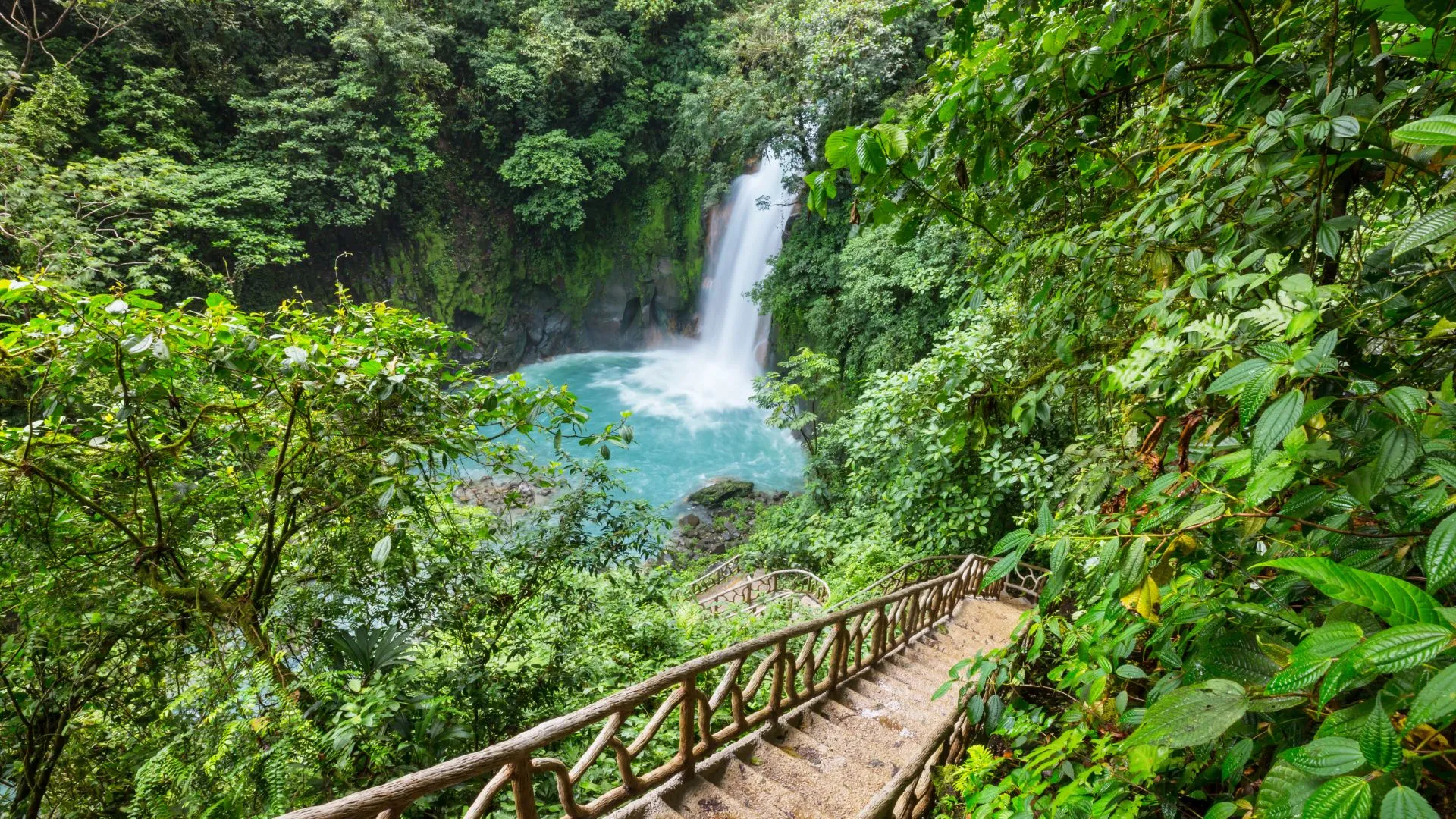
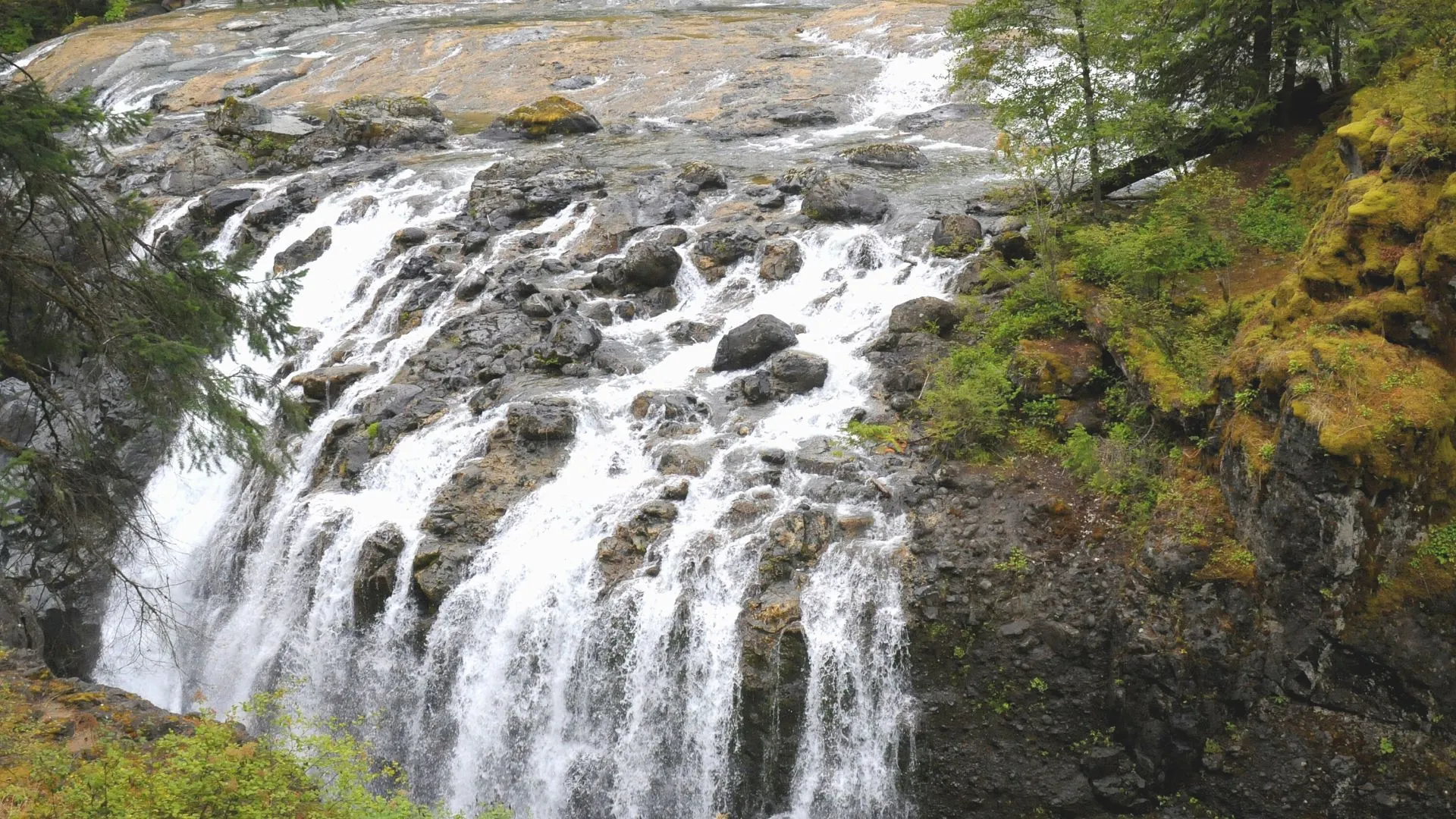
Start with one visible detail: mist on a railing, dark basalt, autumn leaves, a narrow gorge, a footbridge, or the scale of a person near the falls. Then connect it to one emotion or practical memory.
Avoid claims the image cannot prove, such as untouched, secret, safe, easy, or empty. Those words can mislead a future visitor about access and conditions.
For a carousel, give each image a job. The first caption can name the destination, the second can describe a detail, and the final slide can share a useful planning reminder.
When your photos come from a regional trip, link readers to the relevant guide instead of packing logistics into a caption. The Philippines waterfall guide is the better place for destination planning.


Alt Text Is Not a Caption
Alt text should communicate the image's useful visual content, not repeat a poetic line or stuff keywords. Name the place only when the identity is known and relevant.
Describe what matters in context, such as “wide waterfall dropping into a forested gorge” or “wooden overlook beside a two-tier cascade.” Skip “image of” because assistive technology already announces an image.
Do not put a long quotation in alt text. If words are embedded in the image and essential to understanding the post, include the concise text in nearby body copy as well.
Caption Templates You Can Personalize
A template becomes personal when you replace the brackets with one concrete detail from the day. Keep the finished line truthful and remove any adjective the photograph cannot support.
Original template: We took the [trail name] for this view of [waterfall name].
Original template: [Weather detail] made the [rock, forest, or water] look completely different.
Original template: The best part was [specific sound, color, or shared moment].
Original template: One [short or difficult] walk, one [wide or narrow] cascade, and a very worthwhile stop.
Original template: Saving this view from [month or trip name] for the next gray day.
Original template: The photograph caught the falls, but not the [mist, sound, cold, or scale].
What to Do With an Uncertain Attribution
First, search the supposed author's published work and reliable institutional collections using a distinctive phrase. Try spelling variants and translations, but do not treat a translated paraphrase as exact English wording.
If the line appears only in modern lists, unattributed merchandise, or social graphics, leave the name off. Publishing “often attributed to” still repeats an association that may have no evidence.
You can summarize the idea in your own words without quotation marks, provided you do not present the paraphrase as the author's language. Better yet, write what the waterfall made you notice in that particular moment.
Keep a private note of the source page, edition, page number, and date checked for every verified quotation. That record makes future corrections easier if a stronger primary source changes the attribution.
Respect People and Places in the Caption
Use the official place name and include Indigenous or local naming when the responsible authority provides it. Do not rename a site for a joke or describe a sacred or restricted place as your secret discovery.
A caption should not encourage readers to cross barriers, swim beneath a fall, climb wet rock, or bypass a permit. The photograph can celebrate the view without turning risky or prohibited behavior into a challenge.

A Final Caption Checklist
Decide whether the line is original or attributed, then label it honestly. If attributed, verify the exact words and primary source before checking the copyright status of that specific work.
Keep excerpts short, add your own context, and remove anything that depends on a quote aggregator. When verification stalls, choose an original caption that actually sounds like you.

Ellie is the founder of Ellie's Travel Tips, where she shares practical cruise tips, port guides, and step-by-step itineraries to help you plan smarter trips for less. Her checklists and packing guides turn travel daydreams into doable plans.