
The best cruise room is the one that protects your highest-value needs at an acceptable total price. Score sleep, motion, view, outdoor space, walking, party layout, accessibility, and fare control before choosing a category.

Start With a Weighted Scorecard
Give each factor a weight from zero to five, where five means the trip fails if the room gets it wrong. Score each exact candidate against the same factors and keep unresolved claims separate.
Sleep
Inspect the cabin deck plus the decks above and below for public venues, corridors, elevators, stairs, and unlabeled spaces. Adjacency is a possible exposure, not proof of noise.


Motion
Travelers prone to motion can give location more weight, but no room guarantees calm. CDC advises susceptible travelers to discuss prevention with a healthcare provider.
View and outdoor space
Define whether you value light, horizon, downward view, privacy, fresh air, or usable balcony space. A category label cannot answer all of those questions.


Walking and route
Trace the room to dining, pool, childcare, medical facilities, theater, and likely gangway routes. Convenience is personal, so a far-aft room is neither automatically best nor bad.
Party layout
Count lower beds, upper berths, sofa beds, bathrooms, internal doors, privacy, and supervision. Maximum occupancy does not prove a suitable sleeping arrangement.


Choose the Room Type by Traveler
Best for a price-first traveler
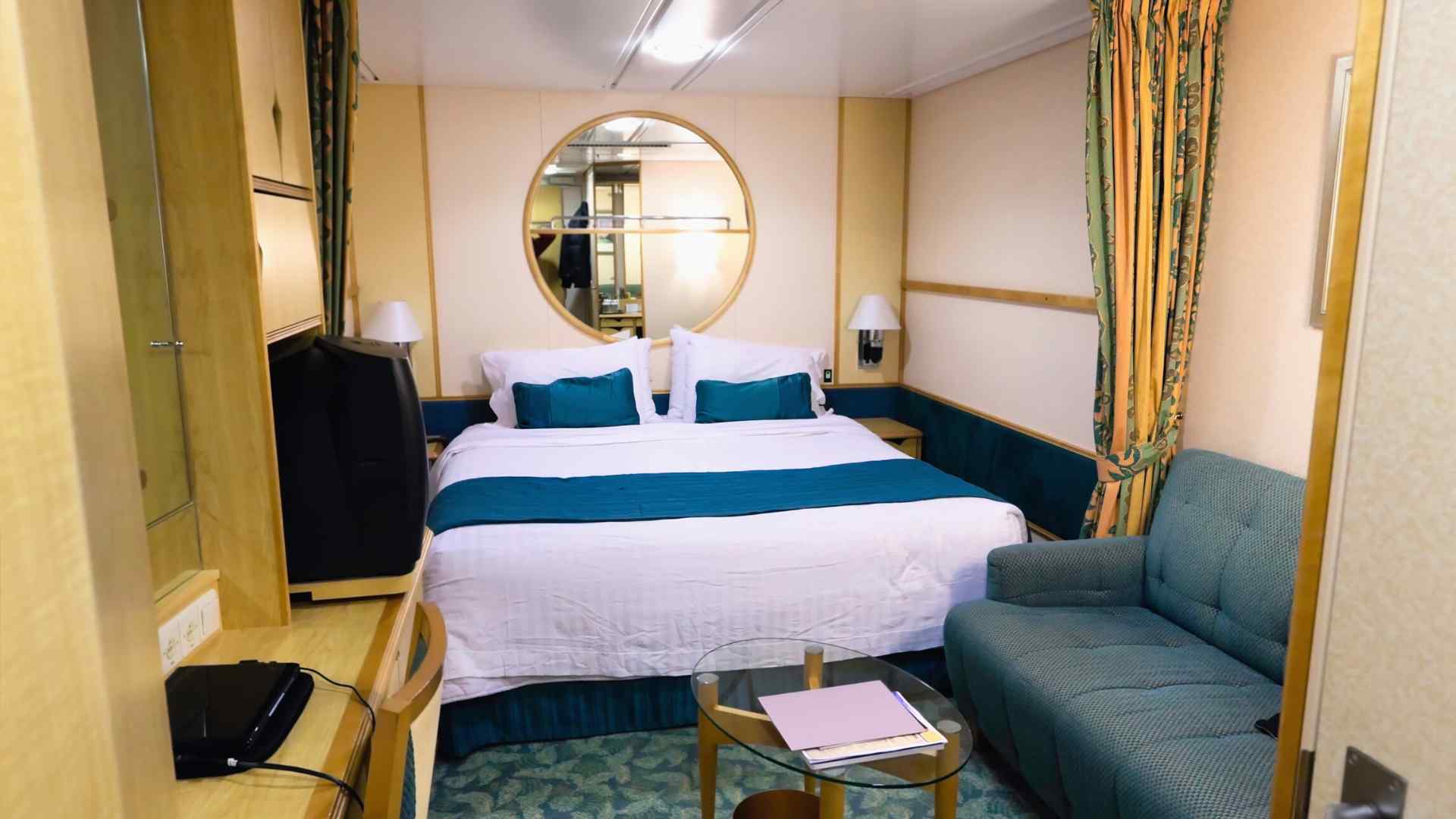
An inside room can be strong when the passenger values darkness, spends little time in the cabin, and would rather fund other trip priorities. Compare final fare and location rather than assuming the lowest category is always the lowest total.
Best for natural-light priority
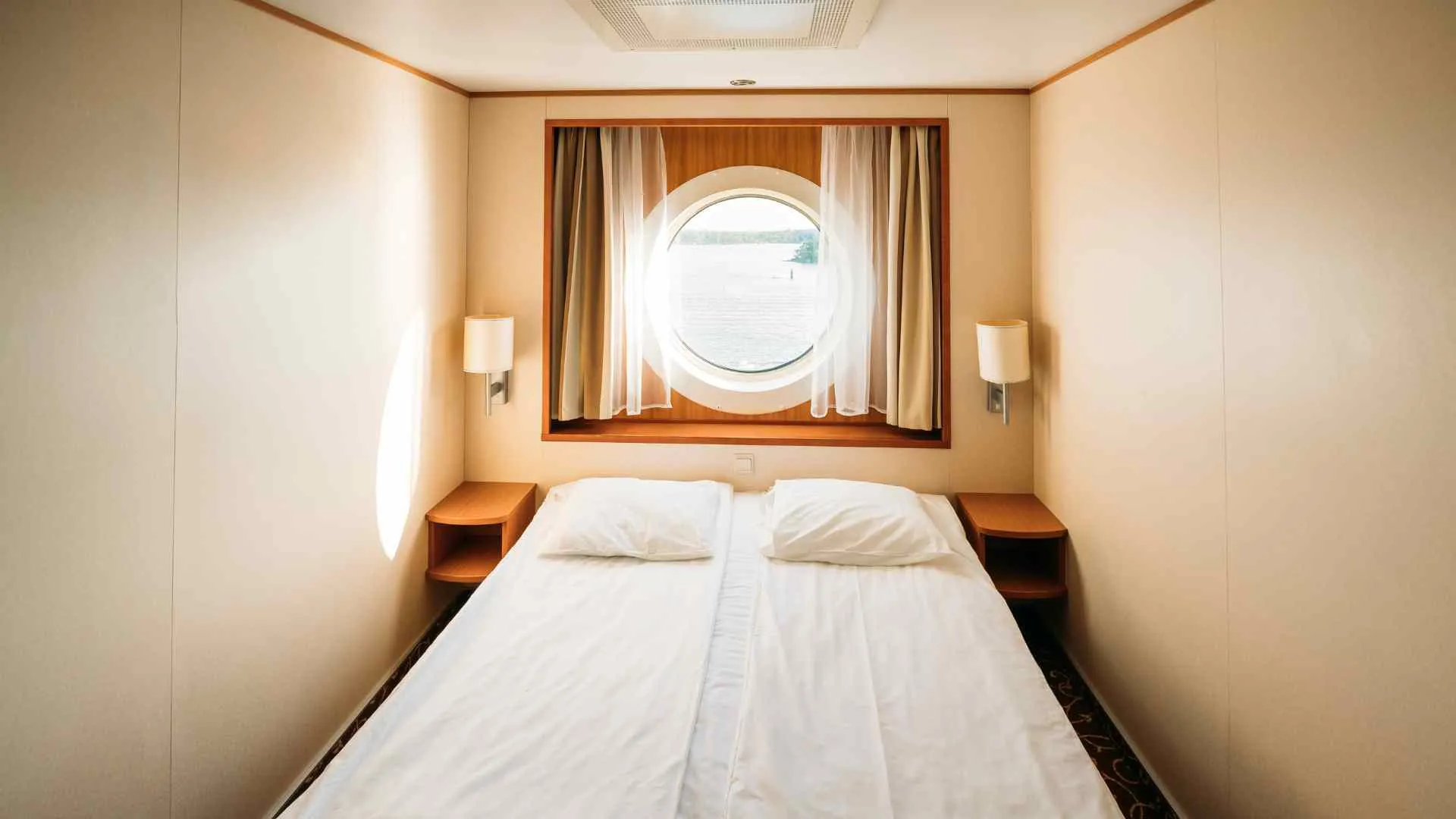
An oceanview can provide light without balcony cost, but porthole, picture window, obstruction, and room shape vary. Verify the exact plan and sightline.

Best for private outdoor space
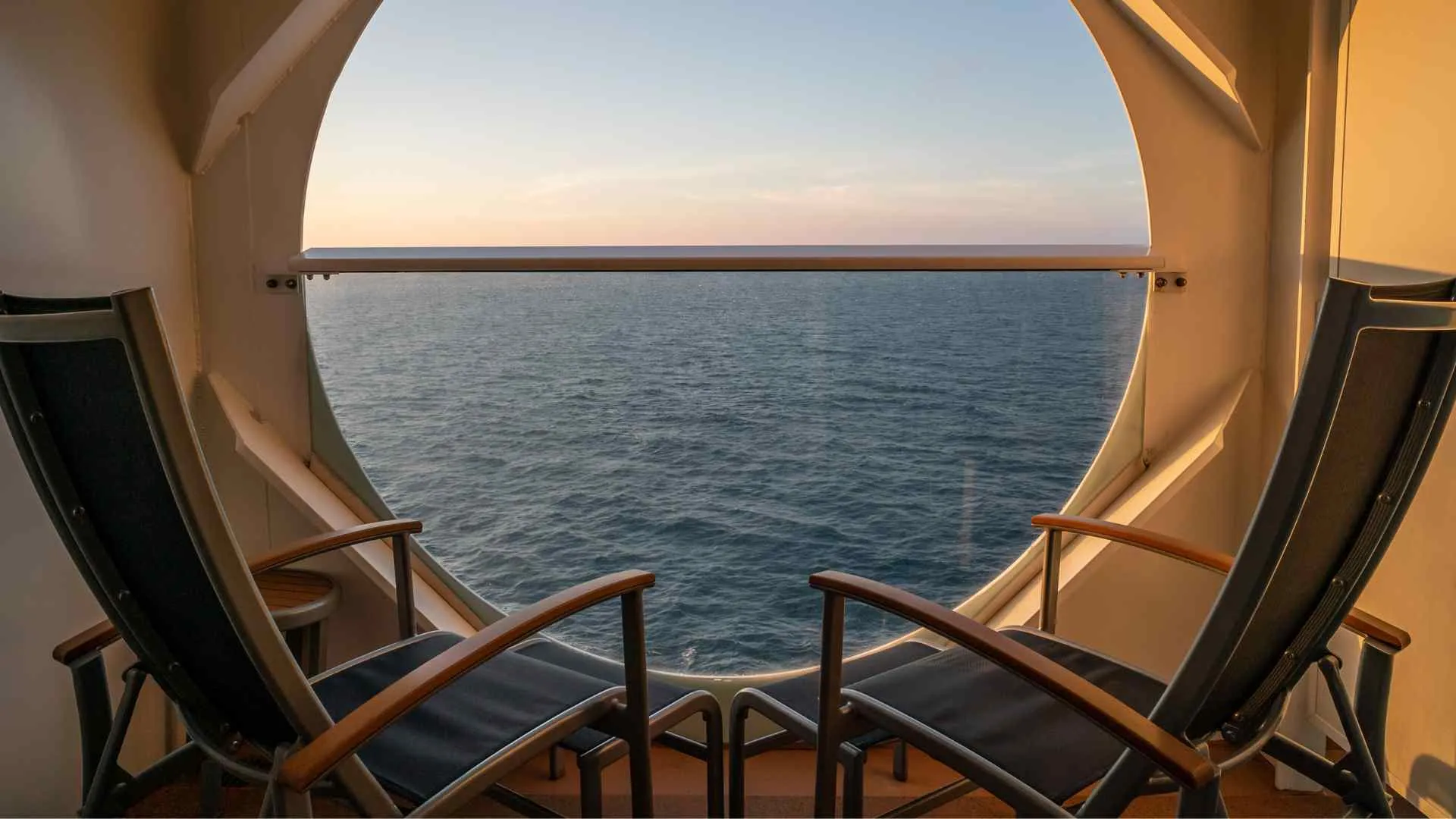
A balcony fits a traveler who will use it enough to justify the difference. Check privacy, obstruction, furniture, exposure, balcony shape, and itinerary conditions before assigning value.


Best for space and benefits
A suite can win when layout and included services replace spending or solve a party need. It loses when the traveler pays mainly for status, unused venues, or benefits that do not apply to the exact ship and fare.


Best for solo travelers
NCL currently sells Solo Balcony, Oceanview, Inside, and Studio products, with Studio Lounge access specific to Solo Studios. Use the official product page as one operator example, then compare the final solo fare with ordinary rooms on the exact ship.
Best for families
Compare one family room or suite with an exact connecting pair and nearby rooms. Two bathrooms and privacy may beat shared space, while one suite may simplify supervision and add useful benefits.


Best for access needs
Accessible rooms are designed for travelers requiring their features. Royal Caribbean describes maneuvering clearances in accessible sleeping, bathroom, and sitting areas, but the exact functional fit still needs confirmation.
Use the official accessibility overview as a prompt, then verify doorway, bathroom, transfer side, bed clearance, balcony threshold, route, and equipment with the booked line.


Location Decisions Without Blanket Rules
Forward
Forward can shorten routes to some venues and create distinctive views on some ships. It can be a poor fit when the traveler's most-used spaces are aft or motion concern is heavily weighted.
Midship
Midship can simplify navigation and balance routes, but it is not automatically quiet or close to every priority. Inspect the exact deck relationships.
Aft
Aft locations can appeal for views or nearby dining on some ships. Do not transfer vibration, soot, balcony, or noise claims from another vessel.


Near elevators
Proximity can reduce walking and improve orientation. A light sleeper may prefer corridor separation, but the plan cannot prove actual passenger noise.
Obstruction, Connection, and Guarantee Choices
Princess says typical arrangements and square footage can vary, and some nautical items are not considered obstructions. Use the official plan disclaimer, then ask what blocks the exact sightline you value.


A connecting room can be ideal when both sides are booked and less desirable for someone prioritizing separation. Confirm the exact symbol because adjacency does not prove an internal door.
A guarantee trades location control under the fare's specific terms. Avoid it when accessibility, bedding, connection, obstruction, or location is nonnegotiable.
Calculate Total Room Value
Compare the same sailing, passengers, and fare conditions. Add cabin fare, taxes, required gratuities, benefits you would otherwise buy, cancellation flexibility, and any second-room cost.
Do not assign value to a drink package, Wi-Fi, exclusive venue, balcony, or concierge unless the exact fare includes it and your party will use it. Prestige is not a line item.


Use a Final Five-Question Test
Does the exact room fit every passenger and required bed? Does the current plan confirm the category, connection, accessibility, and obstruction status?
Can you accept the possible adjacency and walking route? Is every important benefit written into the fare, and is the complete price comfortable?
If any nonnegotiable remains unresolved, choose a different cabin or obtain written confirmation. A higher category does not repair uncertainty.
Use the conditional cabin red flags, floor-plan reading guide, and booking audit for the related checks.


Traveler Scenarios
Light sleeper with no mobility concern
Weight sleep heavily, inspect all three decks, and compare nonconnecting cabins away from uncertain public-space relationships. Accept more walking only if the route remains comfortable.
Traveler with limited stamina
Prioritize the correct elevator bank and repeated destinations, then confirm accessible routes and resting options. Do not trade functional convenience for an abstract quiet location.
Family with different bedtimes
Score closable sleeping areas, bathrooms, lower beds, internal doors, and supervision. A connecting pair may outperform a larger open suite.
Couple on a scenic itinerary
Weight balcony sightline, privacy, seating, weather exposure, and time available to use it. Do not pay for outdoor space from a generic destination photo.
Solo traveler focused on community
Compare a solo product's lounge access and location with an ordinary room's size and final fare. Confirm the exact ship carries the advertised solo category.
Traveler who needs darkness
An inside room may score well when sleep and price lead. Verify route and occupancy without assuming the lowest deck or smallest room is required.
Traveler working remotely
Ask about a usable desk, seating, power rules, Wi-Fi product, time-zone demands, and daytime venue adjacency. A balcony does not substitute for an ergonomic work surface.
Multigenerational group
Compare several cabins as a system, including accessible needs, supervision, proximity, bathrooms, and quiet. One prestigious suite can create poor sleep distribution.
Traveler considering an upgrade
Rescore the new exact cabin instead of accepting the category label. Confirm fare effects, benefits, location, bedding, connection, obstruction, and cancellation conditions.
Traveler with a strict budget
Identify the cheapest cabin that satisfies every nonnegotiable, not the cheapest cabin available. Preserve money for transport, insurance, gratuities, and the experiences that define the trip.
Final Verdict
That approach also makes later price changes easier to judge because the original priorities remain visible and measurable.
Do not hide uncertainty inside a numerical score. Mark any unverified bed, route, benefit, sightline, or connection as unresolved, then require confirmation or select the next candidate.
The winning room should remain acceptable even if its least important luxury disappoints, because every nonnegotiable has already been verified.
Use a tie-breaker only after nonnegotiables pass. Favor the lower complete cost, simpler booking, stronger flexibility, or more certain evidence instead of chasing a marginal category distinction.
Recheck the plan immediately before final payment and after any upgrade. A stale score cannot select a room whose category, assignment, or benefits changed.
Keep the decision record with the travel documents so every passenger understands the chosen tradeoffs. Shared expectations protect satisfaction better than a universal room label.
Score uncertainty separately
Subtract points when a decision-critical claim remains unconfirmed. A glamorous room with uncertain beds or access should not outrank a verified simpler cabin.
Decide how much of the trip budget can support room improvements before browsing. This prevents a category ladder from consuming money reserved for flights, hotels, insurance, and shore plans.
Recalculate per usable benefit
List only features the party will use, then divide the premium across those benefits. Do not count the same balcony, lounge, and view value twice.
Protect cancellation flexibility
Two identical rooms can carry different deposits or change terms. Include the financial risk of an inflexible fare in the score.
Check every passenger's vote
A room chosen for one adult's balcony preference can fail a child needing a lower bed or another adult needing quiet. Resolve conflicting nonnegotiables before optimizing luxuries.
Repeat after assignment
If the line changes the cabin, rebuild the score rather than transferring the old result. Location, connection, bedding, sightline, and benefits may all differ.
Keep a runner-up
Save one acceptable alternative and the reason it scored slightly lower. If pricing or inventory changes, the second choice can be assessed without restarting emotionally.
There is no universal best room. The best choice is the exact verified cabin that scores highest on your weighted needs without forcing an uncomfortable price or an unacceptable unknown.

Ellie is the founder of Ellie's Travel Tips, where she shares practical cruise tips, port guides, and step-by-step itineraries to help you plan smarter trips for less. Her checklists and packing guides turn travel daydreams into doable plans.